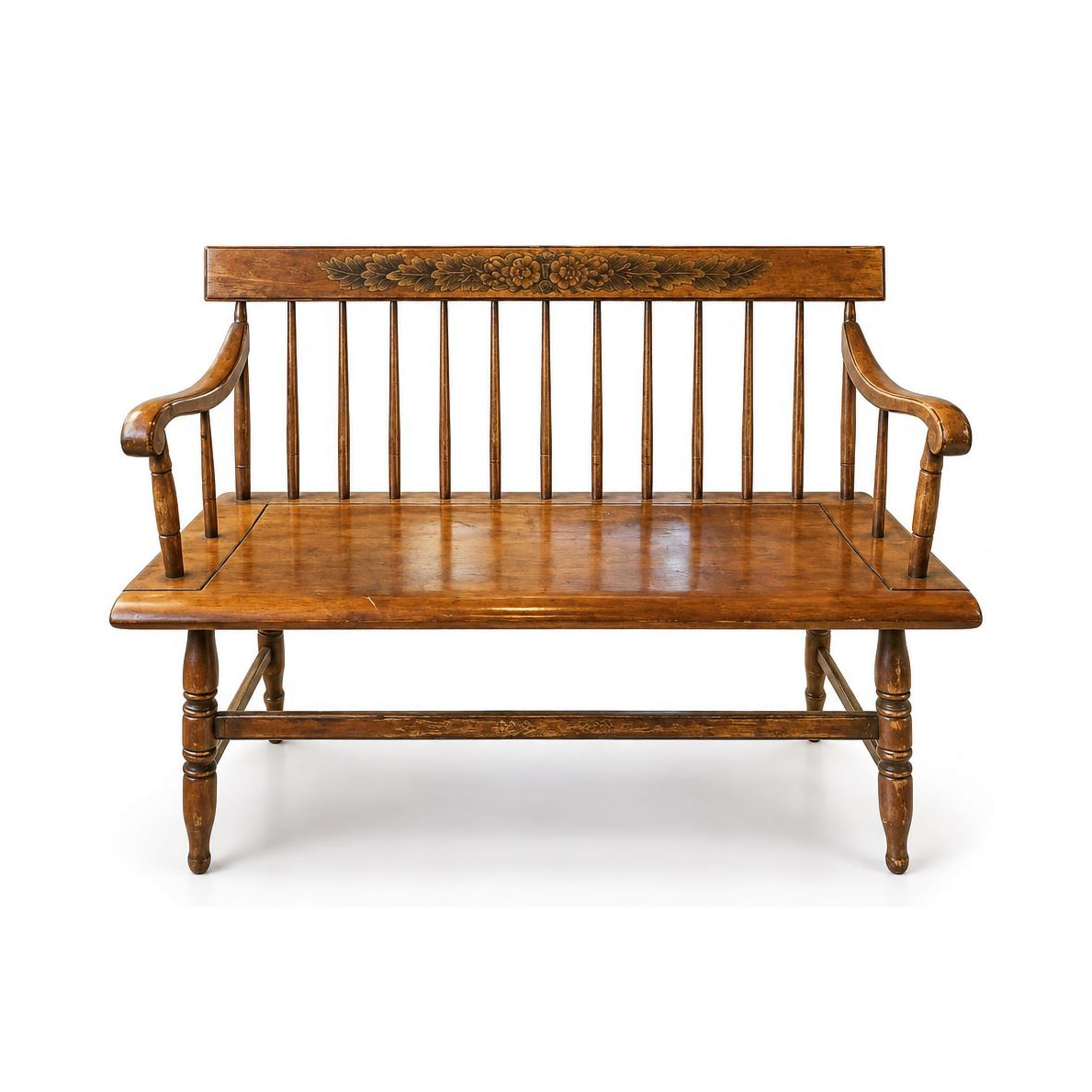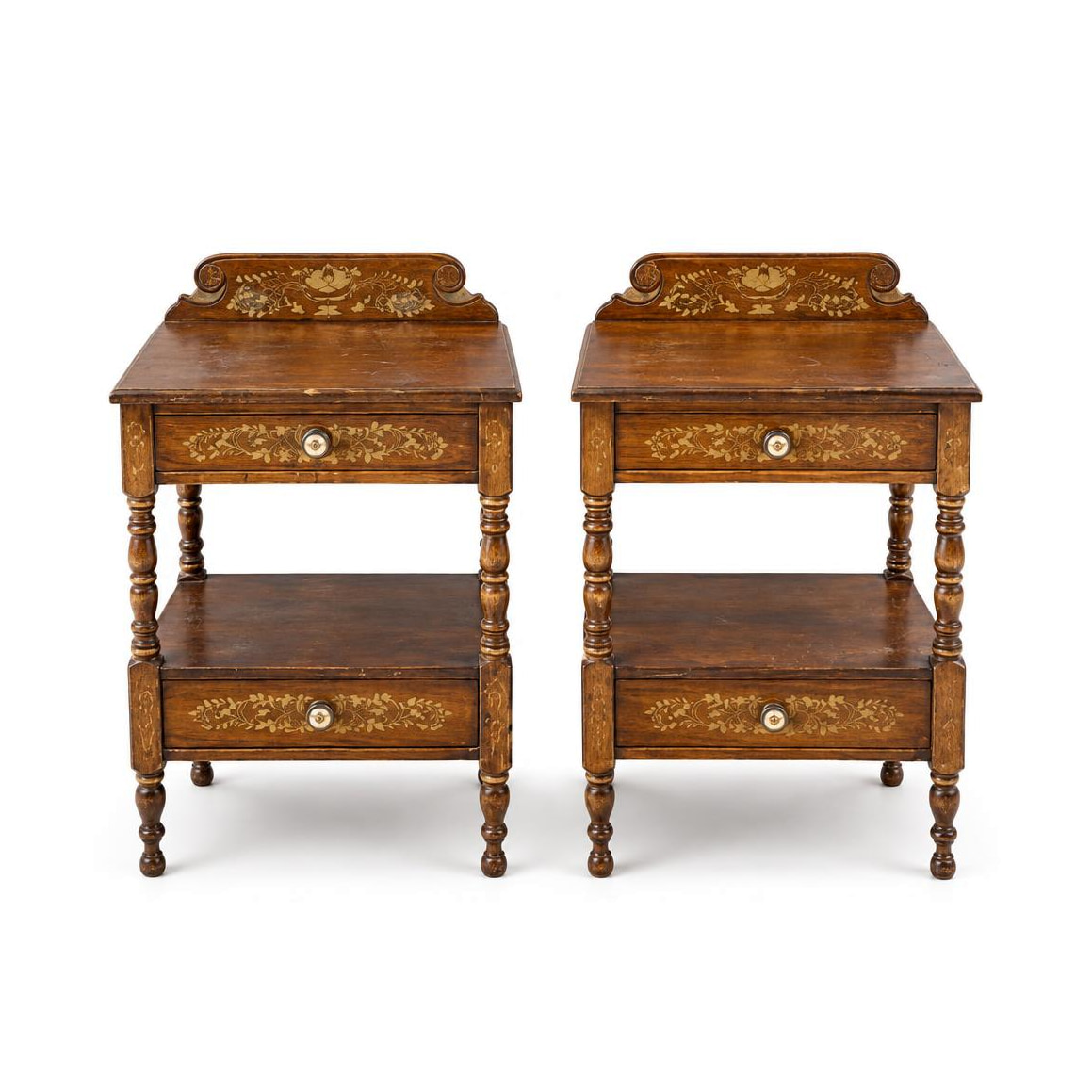
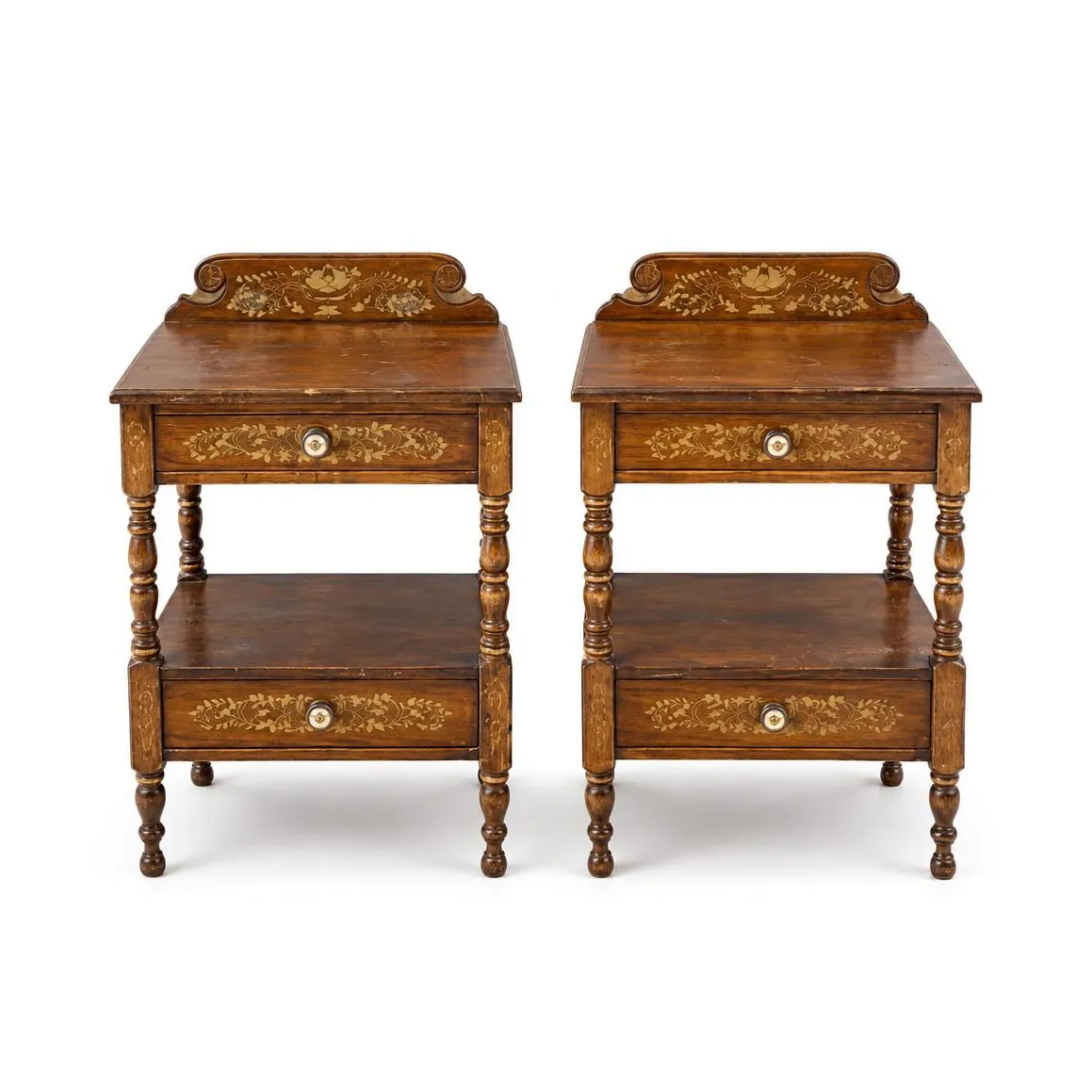
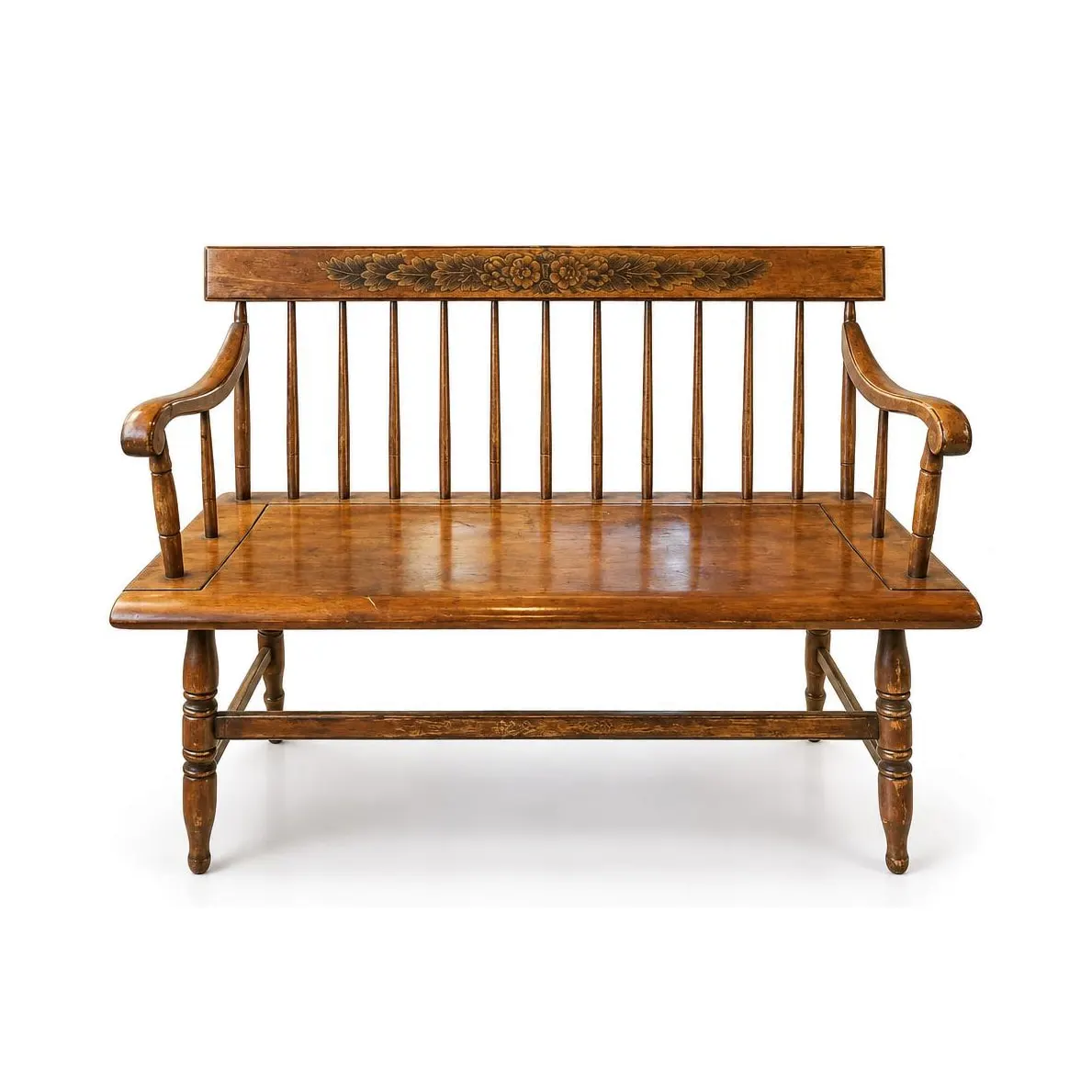
Beautiful Pair of Vintage L. Hitchcock Stenciled Nightstands | Colonial Style
Nightstands (F.05)$375
Lambert Hitchcock made stencil-decorated painted chairs in Hitchcocksville, now Riverton, Connecticut, from 1818. The Hitchcock Chair Company revived his designs and his stencilled mark in the same village from 1946 to 2006, adding tables, case pieces and other furniture.
Lambert Hitchcock starts making chair parts at a sawmill in Barkhamsted, Connecticut, where the Farmington and Still rivers meet.[1]–[3][8]
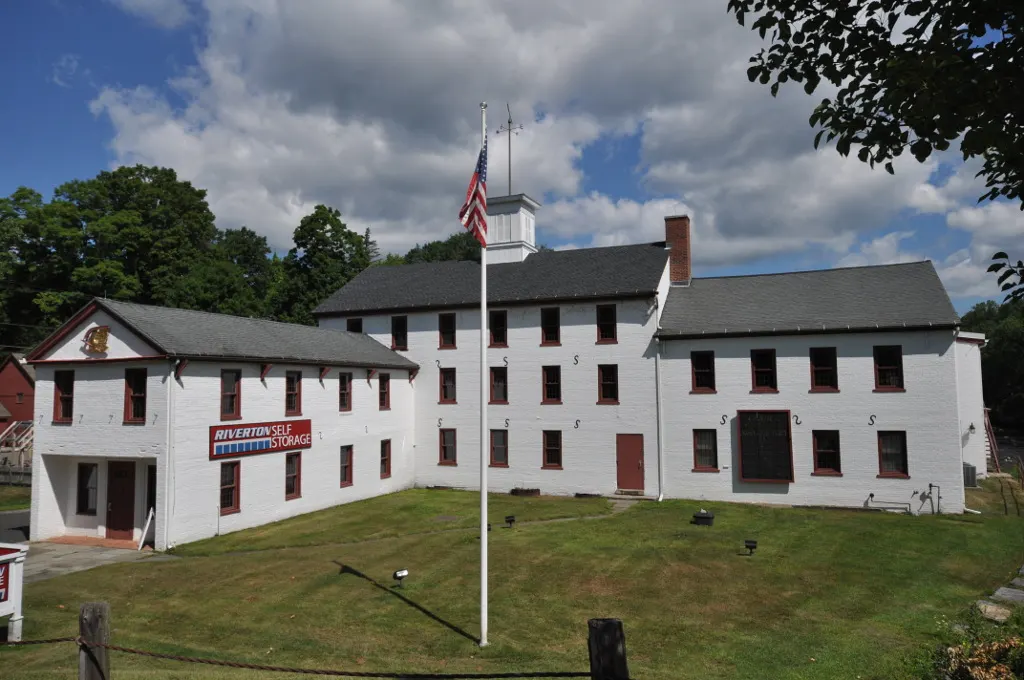
He builds a three-storey brick factory in the village, by then called Hitchcocksville.[1]–[3][8]
Hitchcock takes his brother-in-law Arba Alford into partnership, and chairs are marked Hitchcock, Alford & Co.[1][2][7]
Hitchcock leaves the partnership and moves to Unionville, Connecticut.[1][3][8]
John Tarrant Kenney finds the empty factory on a fishing trip and founds the Hitchcock Chair Company to reproduce the chairs.[1][2][8]
The Hitchcock Chair Company closes its factories and stores.[1][2][5]
Rick Swenson and Gary Hath buy the Hitchcock name, designs and stencils and reopen in Riverton the next year.[1][5][6][8]
Hitchcock made inexpensive 'fancy' chairs for middle-class homes, loosely based on Sheraton and Empire styles. Parts were roughed out by water-powered machines, glued together, then painted black or dark green and decorated by stencilling metallic powders onto the back rails: fruit, flowers, leaves, baskets and cornucopias, with yellow or gold striping on the legs and rails. Seats were rush or cane, and the frames were usually maple and birch. Women did most of the stencilling. The Metropolitan Museum of Art also holds a three-seat settee from the factory.
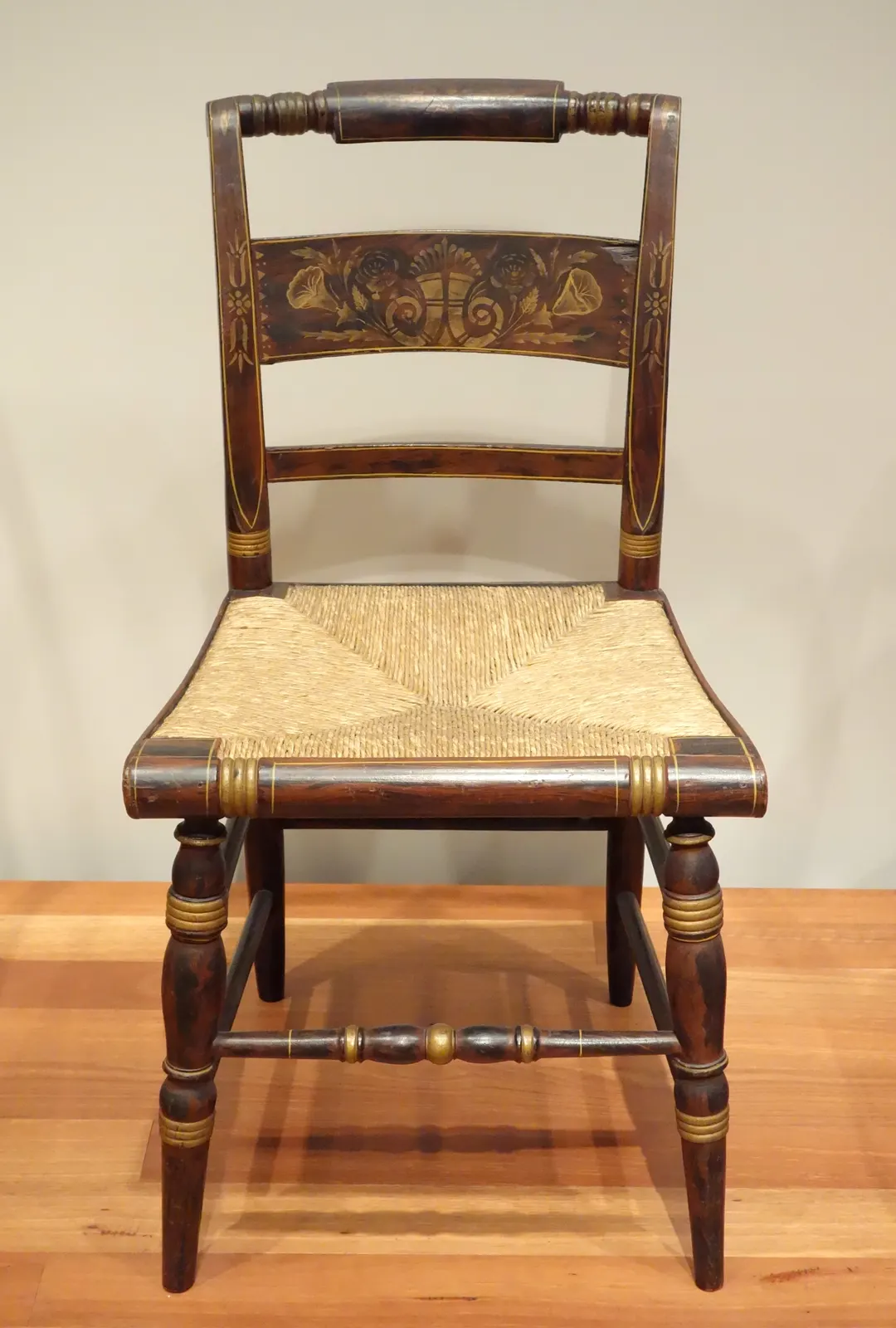
The revived company of 1946 to 2006 copied the original chairs, mark included, and went on to make a much wider range of furniture, including tables and case pieces. ConnecticutHistory.org reports about 190 factory workers and roughly 80,000 pieces a year by 1967, and a larger factory in New Hartford, Connecticut, from 1976. The New England Historical Society lists its 1950 chair models as slat back, turtle back, crown back, button back, eagle and cornucopia, made of Connecticut rock maple with rush seats.[1]–[3][7][8][10]
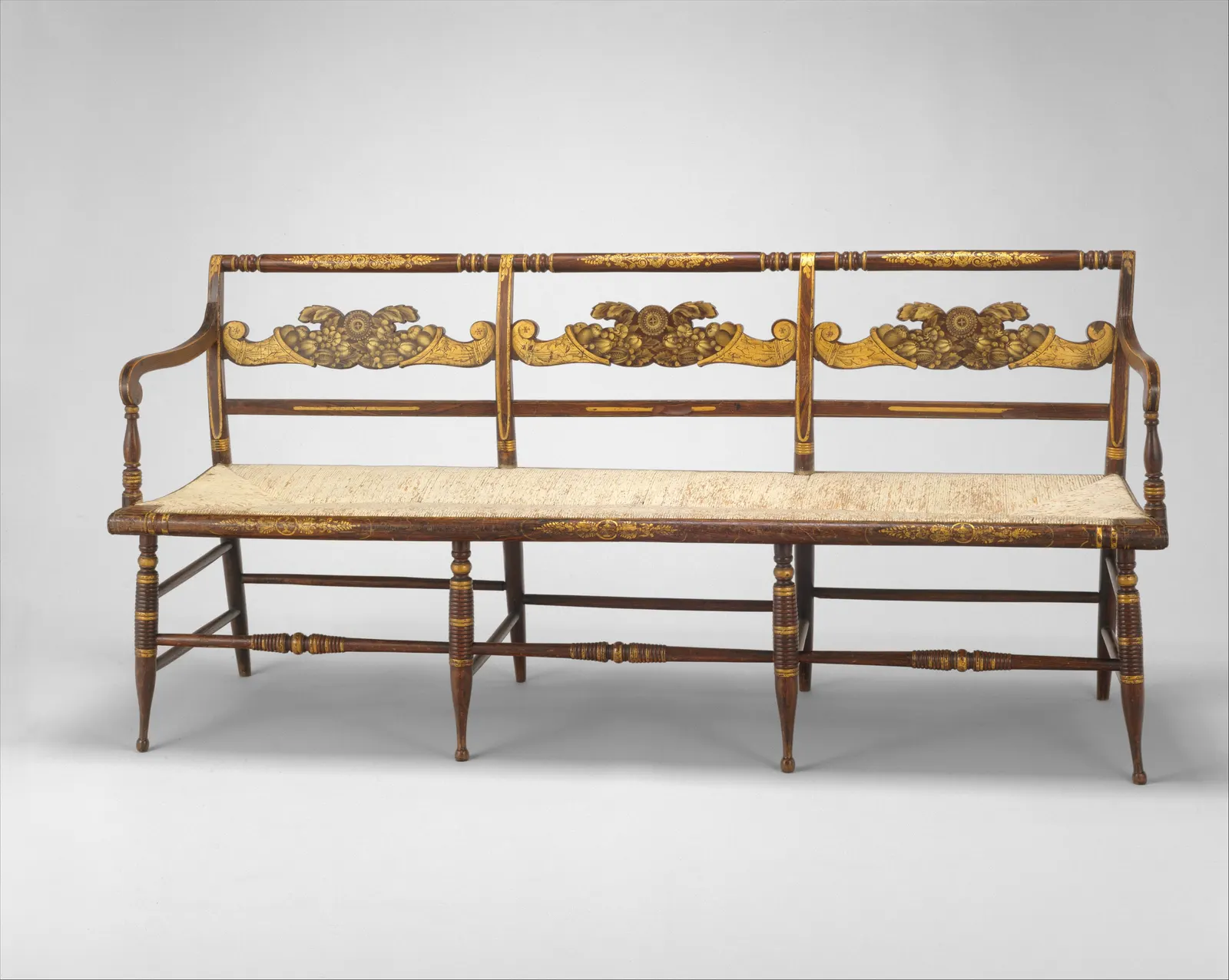
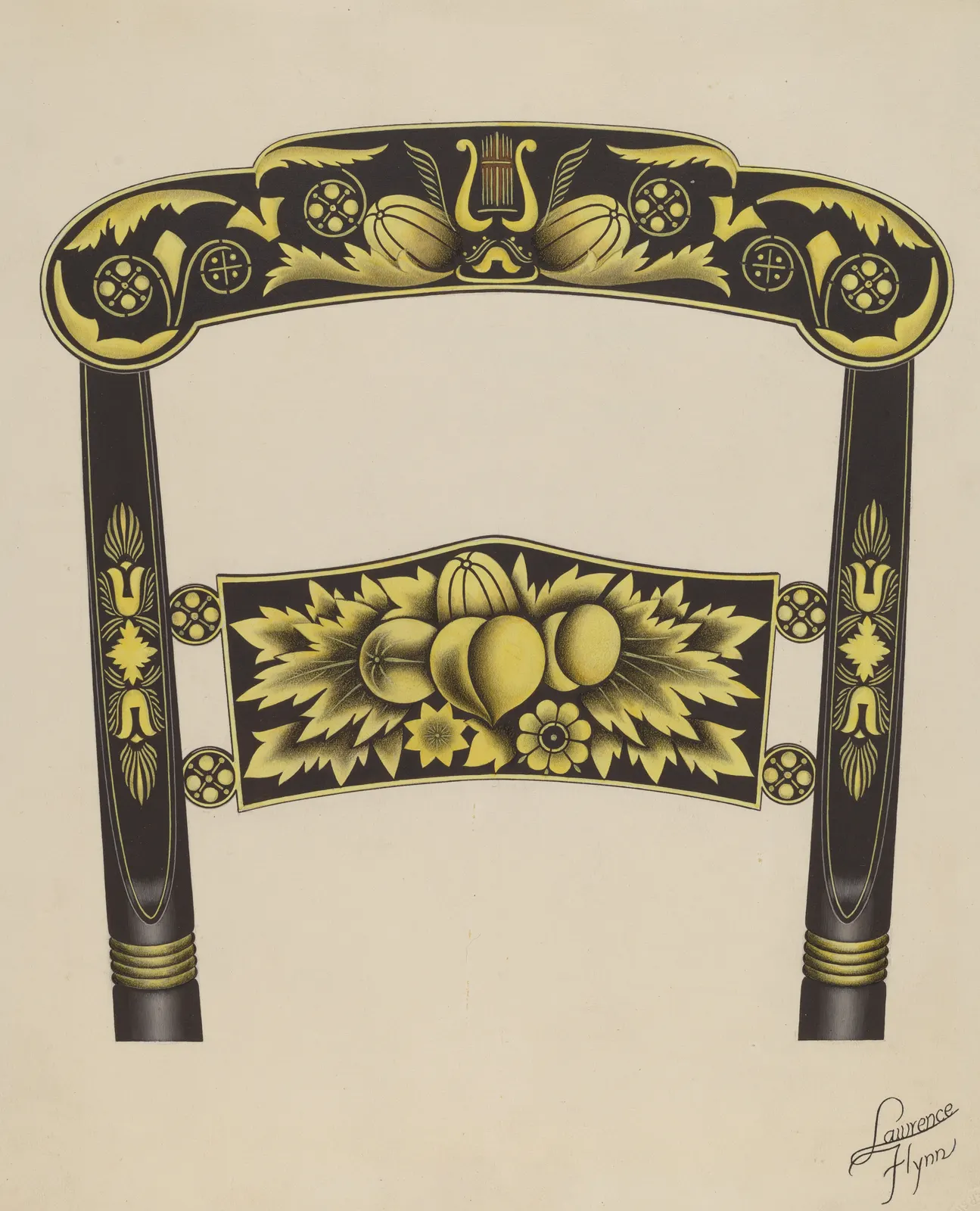
Woodshop News reported in 2012 that the relaunched Riverton company's best-selling range was Classic: Sheraton-style chairs in black paint over maple with nature-themed stencils. It listed Signature Series (limited editions built to order), Pleasantville (Shaker-style chairs and tables) and Country Heritage (a plainer, informal style) alongside it.[5]
Lambert Hitchcock trained under the Litchfield cabinetmaker Silas Cheney. In 1818 he began making chair parts at a sawmill in Barkhamsted, Connecticut, where two rivers meet, and the settlement came to be called Hitchcocksville. In 1825 he built a three-storey brick factory there. Its chairs had stencilled decoration across the back and a stencilled mark reading 'L. Hitchcock. Hitchcocks-ville. Conn. Warranted.' The business failed in 1829 and was reorganised in 1832 with Arba Alford as a partner. Hitchcock died in 1852, chair making at the old factory ended in 1864, and in the 1860s the village was renamed Riverton. In 1946 John Tarrant Kenney, a shoe retailer from the Hartford area, found the empty factory on a fishing trip and revived the company. It reproduced the chairs, mark included, sold its first ones in 1948 and later made other furniture too. The revived company closed in 2006. In 2010 new owners bought the name and designs and reopened in Riverton.[1]–[7]
Read the stencilled mark on the back of the seat rail or under the seat. A circled R and backward Ns mean the chair was made by the Hitchcock Chair Company after 1946. Backward Ns alone are not proof of a reproduction, because many Hitchcock, Alford & Co. chairs of the 1830s have them too.[2][6][7]
It is stencilled on the back of the seat rail, the rail below the back of the seat, and on some chairs under the seat. It reads "L. Hitchcock. Hitchcocks-ville. Conn. Warranted." or, from 1832 to 1843, "Hitchcock, Alford & Co."[1][2][6]
A painted side chair, usually black, with stencilled gilt decoration across the back rails, turned legs and a rush or cane seat, made in a factory from uniform machine-made parts. The name comes from Lambert Hitchcock of Hitchcocksville, Connecticut, but similar unmarked chairs by other makers are also called Hitchcock or Hitchcock-type chairs.[2][3][8]
Original chairs were mostly maple and birch, with beech in some, under paint. The New England Historical Society says the revived company used Connecticut rock maple.[1][7][8]
ConnecticutHistory.org says Lambert Hitchcock also made cabinets and tables once his chairs sold, and the Metropolitan Museum of Art holds a settee from his factory. The revived company from 1946 made a full range of furniture, including tables and case pieces, sold under the Hitchcock name.[1]–[3][10]
The company founded in 1946 closed in 2006. In 2010 Rick Swenson and Gary Hath bought the name, plans and stencils and reopened in Riverton in 2011; the company's website now gives an address in Winsted, Connecticut, and offers restoration of old Hitchcock furniture.[1][5][6][9]
Looking for a piece by Hitchcock? Tell Kate what you need, with the size and budget you have in mind, and she will look for one. Or write to hello@formanashville.com.
New pieces go out first in the weekly letter.
One email a week, on Thursday. What arrived, what sold and for how much, and a line or two on what we are working on.