Makers / DrexelBy maker0 available, 5 found

Drexel

Drexel Furniture Company was founded in 1903 in Drexel, North Carolina, and grew into a maker of medium- and upper-priced bedroom, dining and living room furniture in period, provincial and modern styles. After buying Heritage Furniture in the 1950s it became Drexel Heritage in 1968; its best-known mid-century lines include Precedent, Profile and Declaration.

None available right now, 5 in the archive

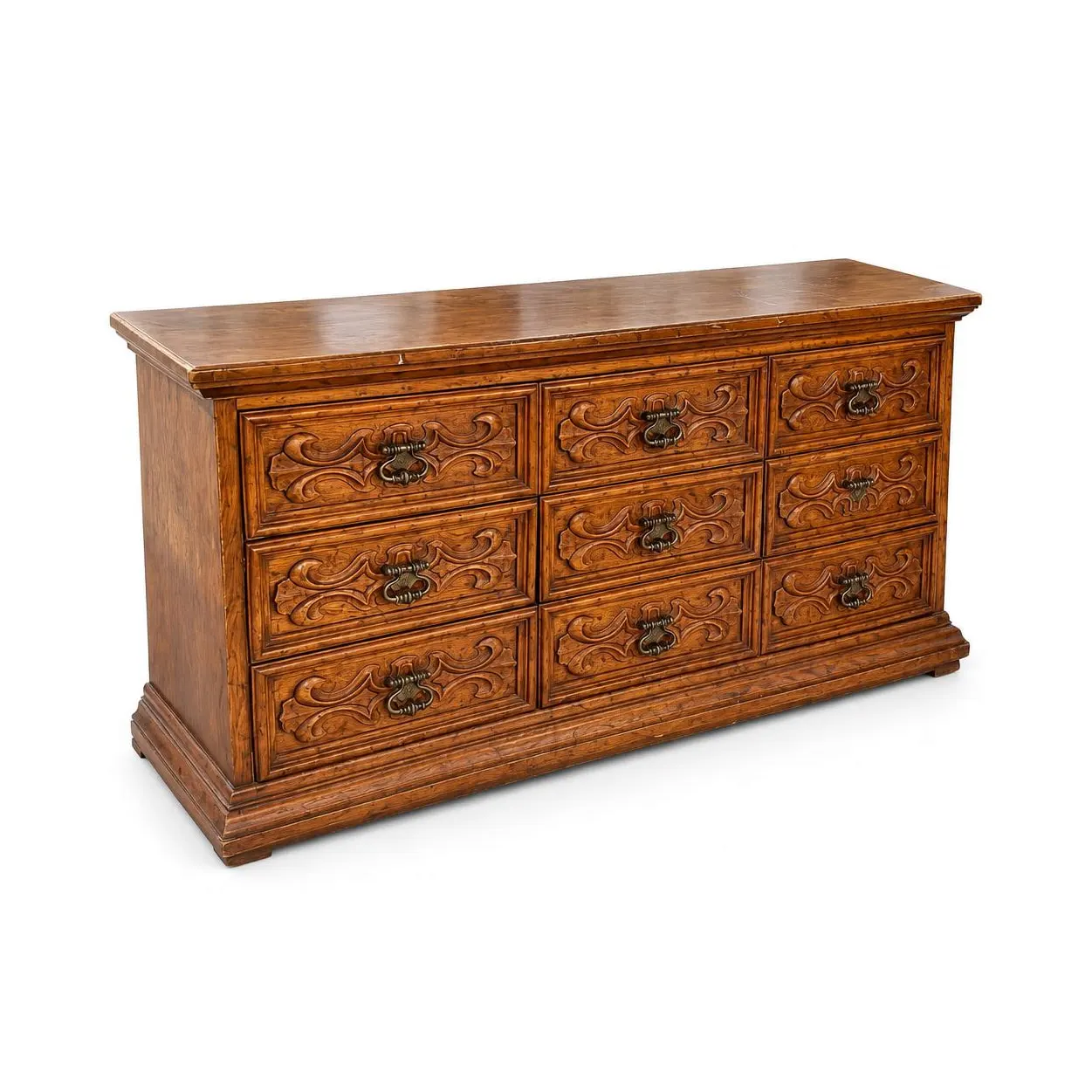
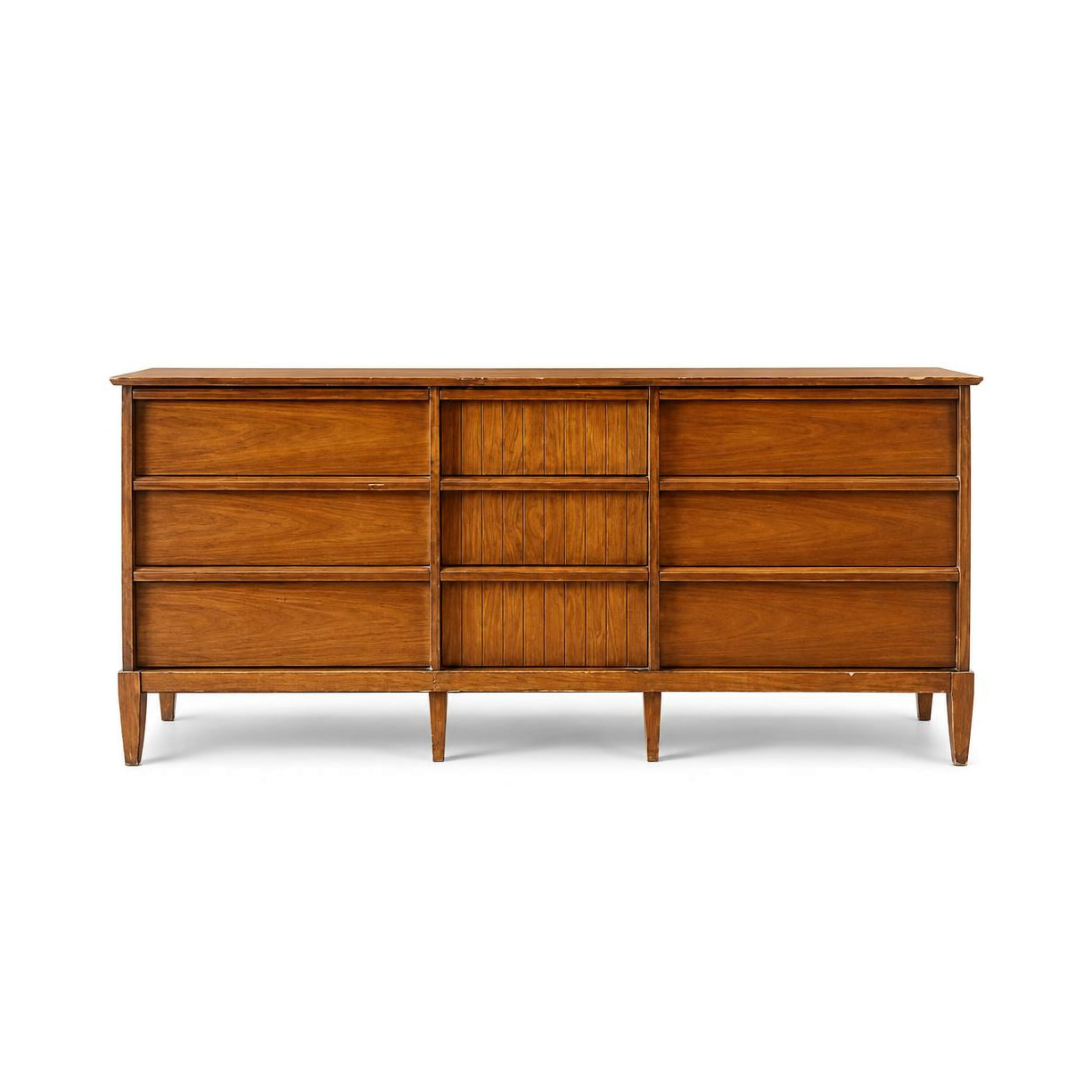
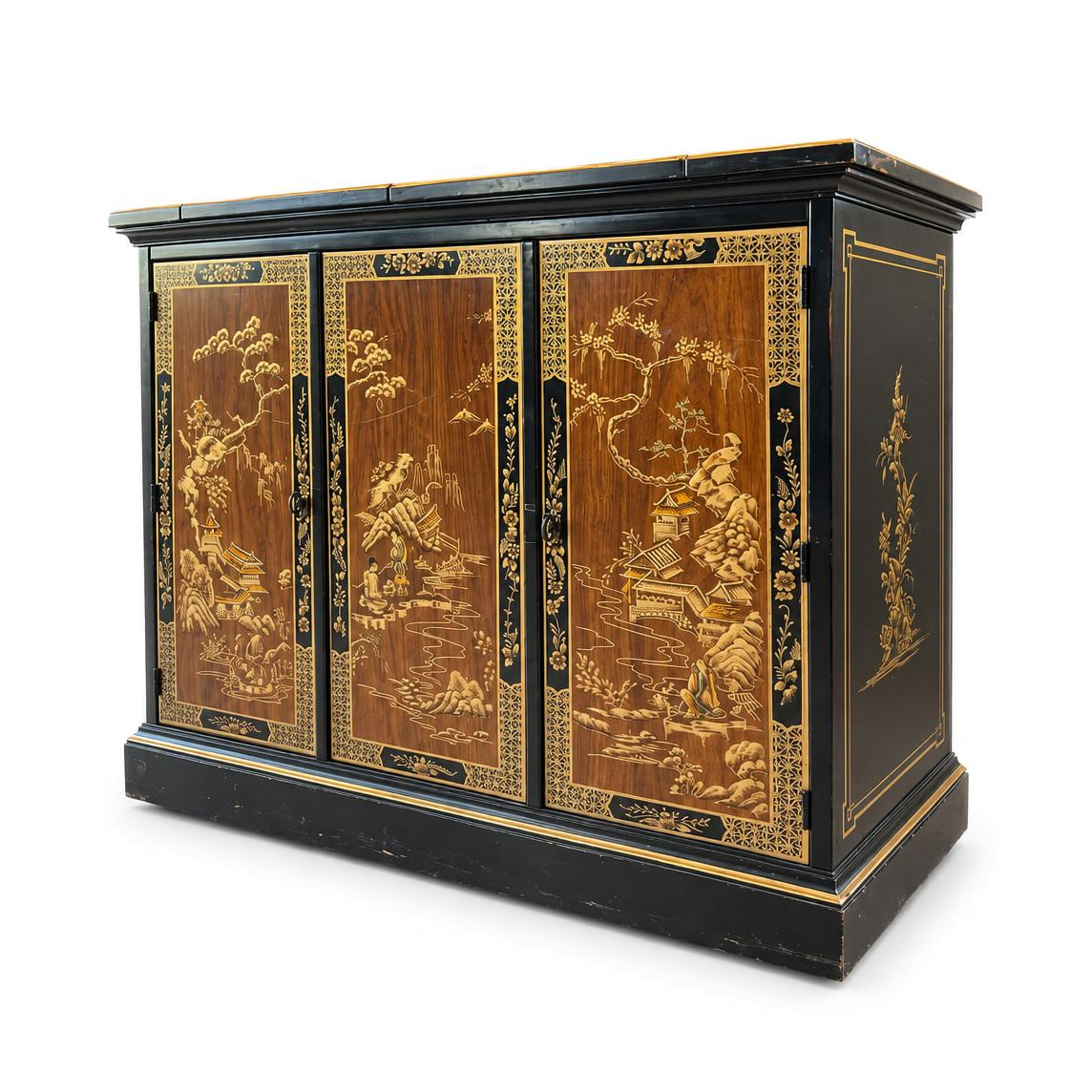
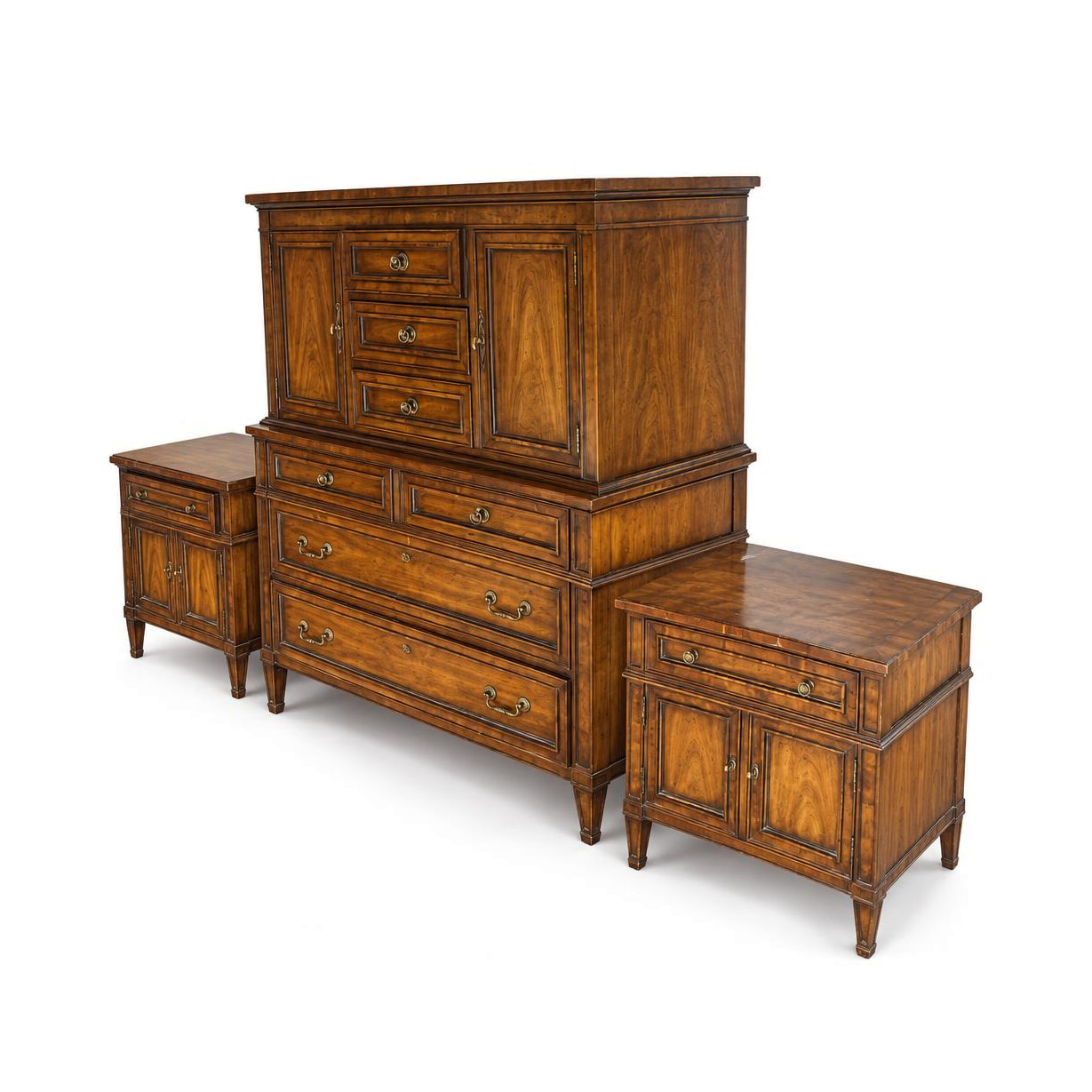
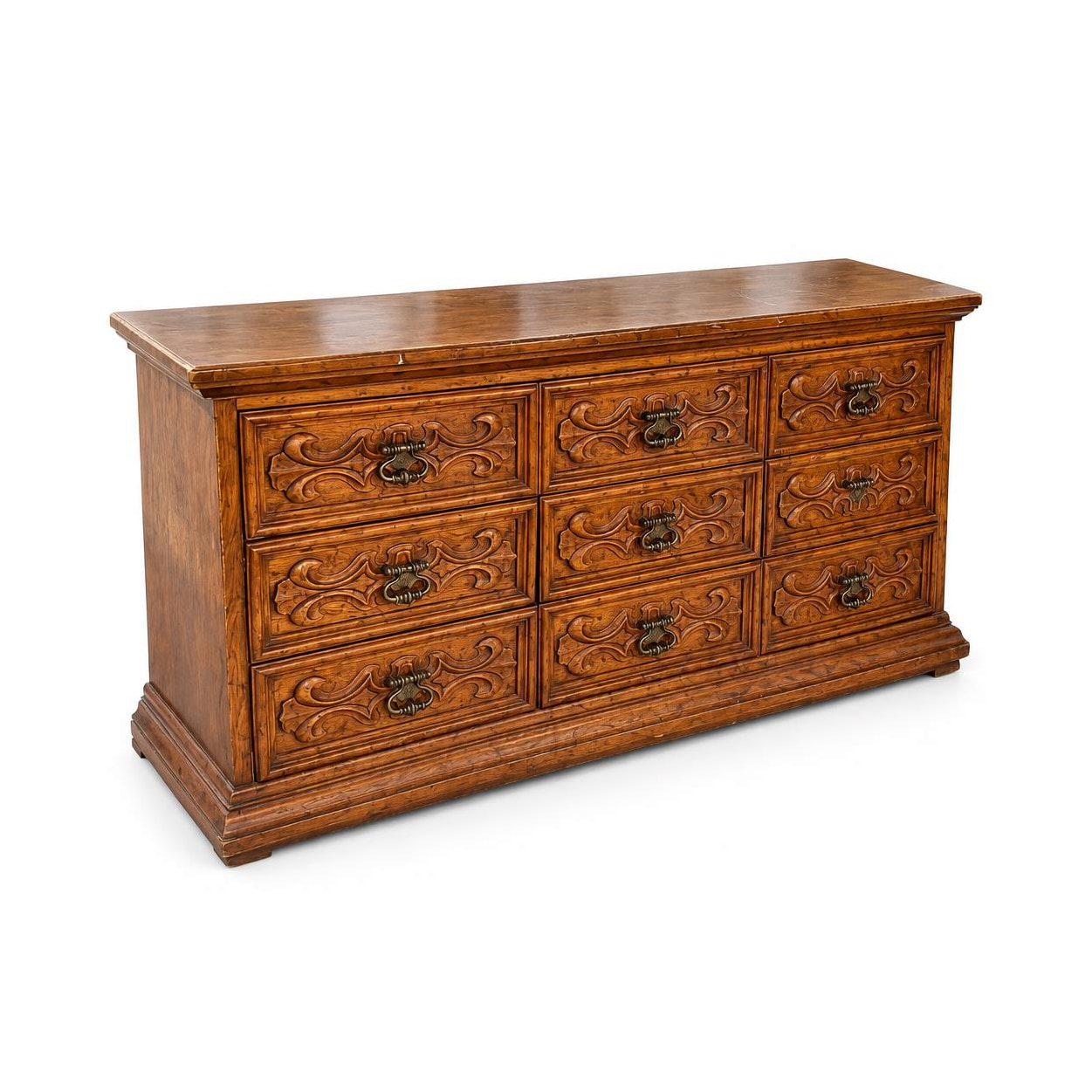
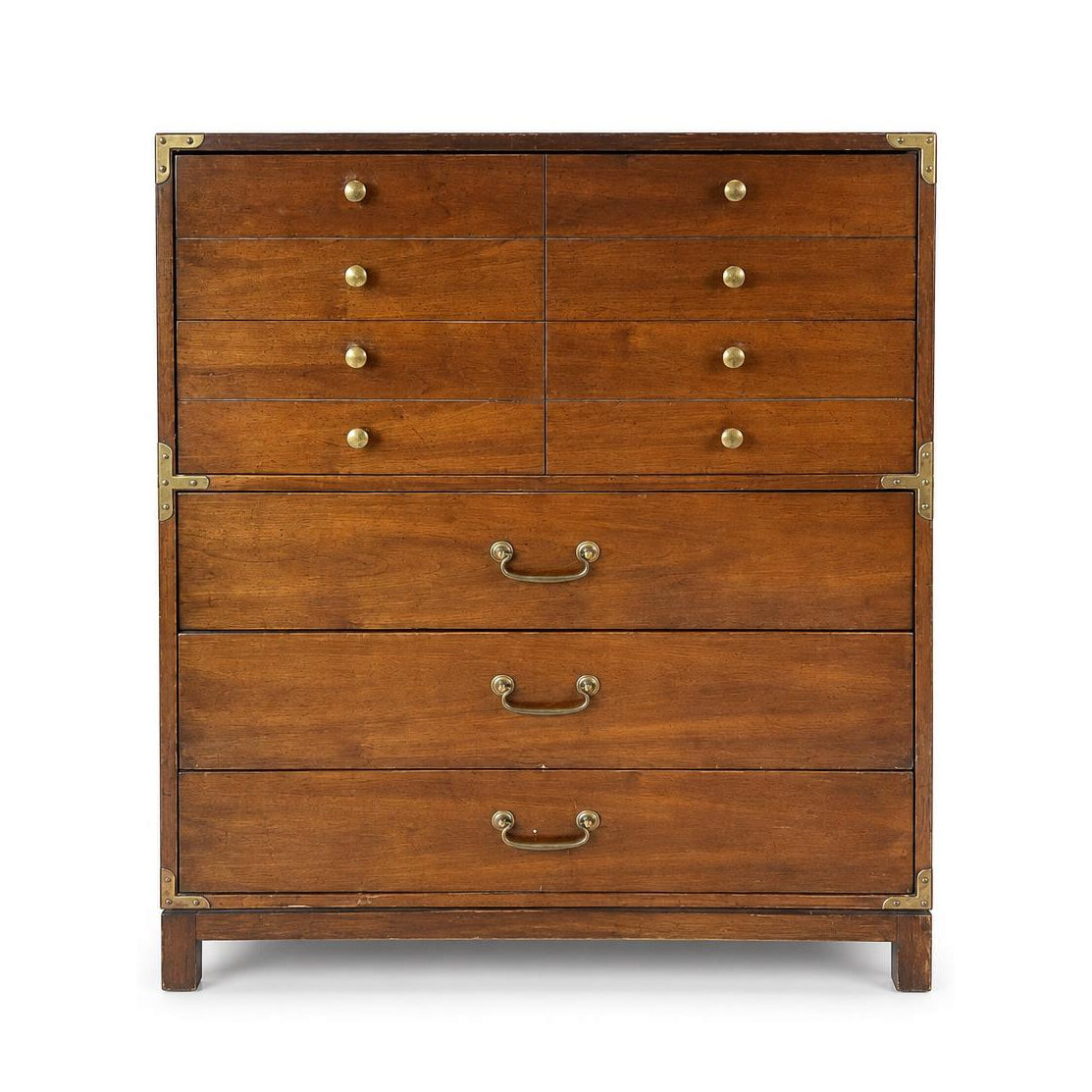
Drexel Spanish Revival lowboy dresser in a warm wood finish with nine carved drawer fronts and dark metal pulls, on a white backgroundMCM Drexel - County Station Collection - Walnut Dresser / CredenzaBeautiful Black and Gold Asian DREXEL Flip Top Server - Amazing Condition - Christmas Present!MCM Drexel Heritage Mid Century Dresser and Pair of Matching Nightstands - Immaculate Condition

The timeline

Founded
1903
Where
Drexel, North Carolina
Through Forma
5 pieces
  1. 1903

    Drexel Furniture Company is founded in Drexel, North Carolina, by Samuel Huffman and five other investors with $14,000.[1][2][8]

  2. 1935

    Robert O. Huffman becomes president and moves the company from low-priced furniture towards the medium-price market, backed by national advertising.[1][2]

  3. 1947

    Edward Wormley designs the Precedent collection for Drexel.[26][27]

  4. 1951–57

    Drexel buys Table Rock Furniture and Heritage Furniture (accounts date the Heritage purchase to 1951 or January 1957).[1][2]

  5. 1957

    Drexel introduces Profile, designed by the silver designer John Van Koert.[9][25]

  6. 1960

    The parent company takes the name Drexel Enterprises; 1960s catalogues describe Drexel Furniture Company as a division of it.[2][11][21]

  7. 1968

    U.S. Plywood-Champion Papers buys the company, and the furniture business becomes Drexel Heritage Furnishings.[1][2]

  8. 1977–86

    Drexel Heritage is sold to Dominick International in 1977 and to Masco in 1986.[1][2]

  9. 2014

    The last Drexel Heritage factory, in Morganton, North Carolina, closes.[3][29]

  10. 2018

    Heritage Home Group, the brand's owner, files for bankruptcy and the Drexel name passes to new owners.[2][3]


Available now

(00)

Nothing by Drexel is in the studio right now. Tell Kate what you need and she will look for one.


What they made

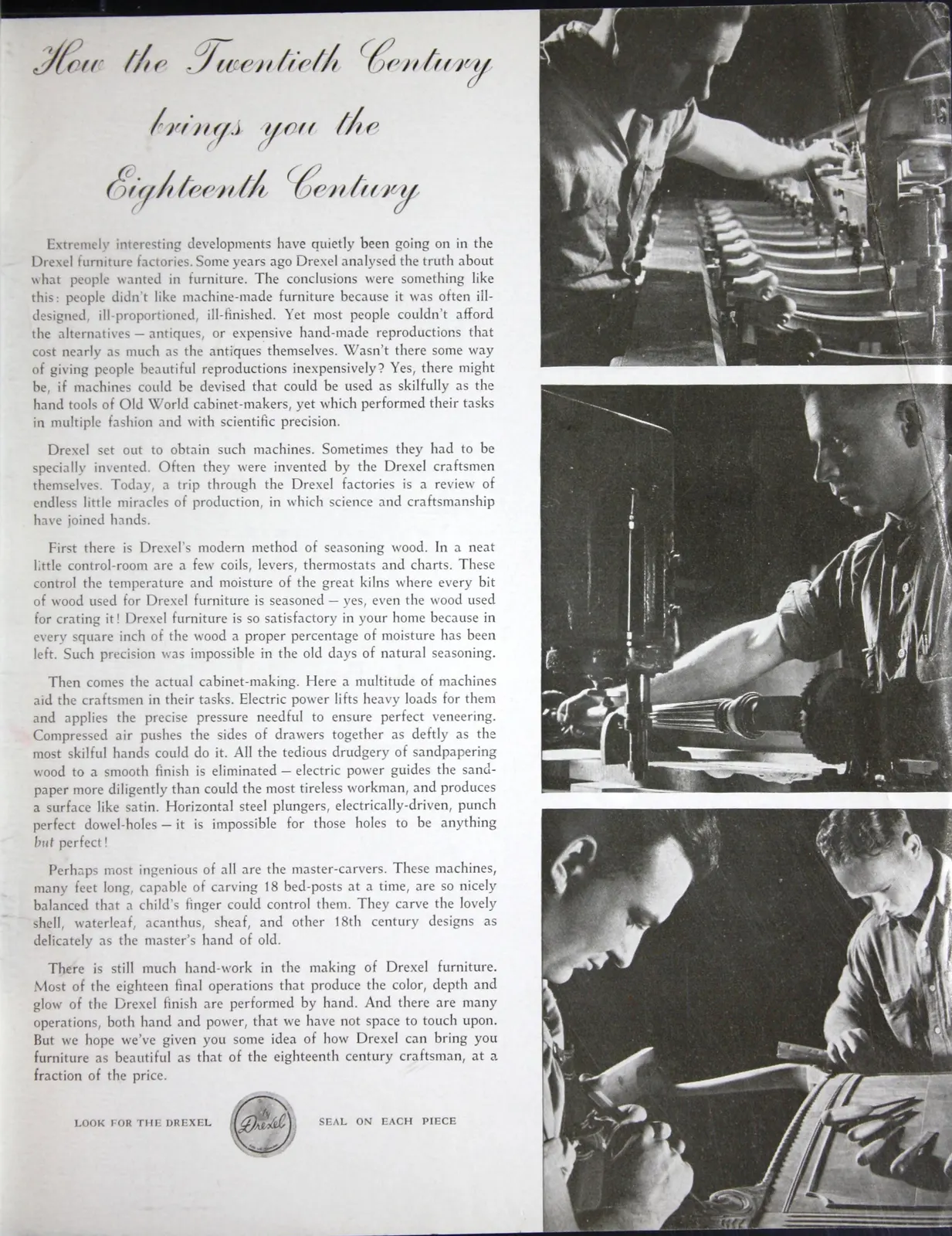
Drexel started out making oak dressers, washstands and chiffoniers at the low end of the market. From the mid-1930s it moved into medium-priced furniture, and by the 1950s it sold in the middle and upper price brackets, with complete bedroom, dining room and living room groups and its own upholstery. A separate side of the business made institutional furniture for libraries, dormitories, hospitals, churches and offices.

Catalogue page headed 'How the Twentieth Century brings you the Eighteenth Century', with three photographs of Drexel factory workers operating machines and carving, and the Drexel seal at the foot of the text
Drexel's 1939 catalogue on its factories, with photographs of machine work and carving.Drexel Furniture Company; Canadian Centre for Architecture, via Internet Archive, Public domain (Public Domain Mark 1.0) (source)

Drexel worked across many styles at once. Its catalogues show 18th-century English and American reproductions in mahogany and cherry, French and Italian provincial, Spanish and Mediterranean groups in pecan, Early American, and contemporary walnut lines. Most collections were sold open stock, so a buyer could add pieces over the years.

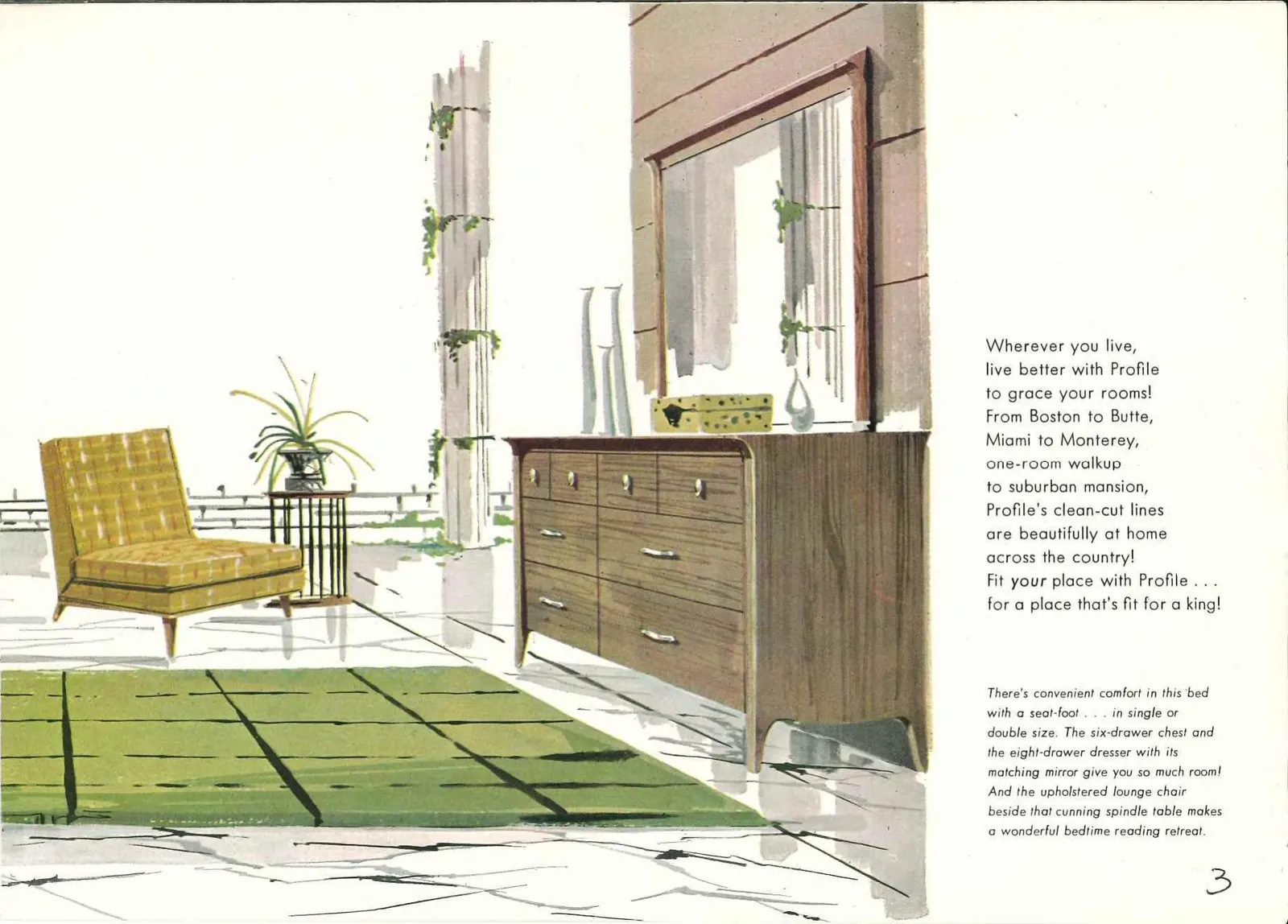
Colour illustration of a walnut eight-drawer Profile dresser with a tall mirror, beside a yellow upholstered slipper chair and a spindle table
Profile by John Van Koert, from Drexel's 1957 catalogue.Drexel Furniture Company; The Hoard catalogs, via Internet Archive, Public domain (Public Domain Mark 1.0) (source)

The catalogues are explicit about construction: show surfaces such as drawer fronts, tops and end panels are veneer (walnut, pecan, cherry, mahogany or burl), while legs, posts, rails and mouldings are solid pecan, mahogany or other hardwood. Drawers are dovetailed. Drexel defended veneer in its own literature as stronger and less likely to split than solid boards.[1][2][8][9][11][13][18][21][22]

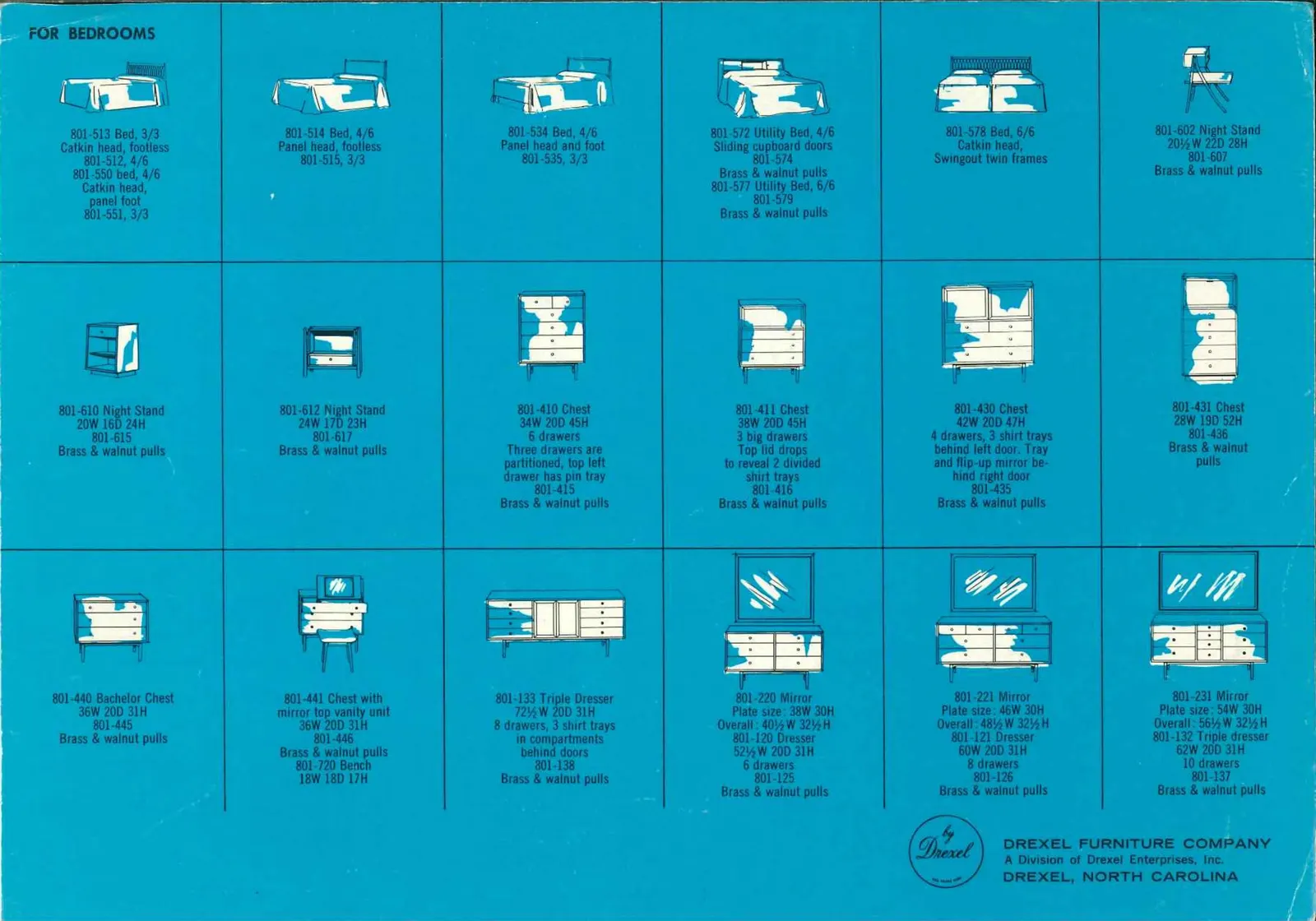
Blue catalogue sheet of Declaration bedroom pieces drawn in white, each with a style number such as 801-410 Chest and 801-120 Dresser and the alternative number for brass and walnut pulls
Declaration bedroom pieces and style numbers, from Drexel's 1964 catalogue.Drexel Furniture Company; The Hoard catalogs, via Internet Archive, Public domain (Public Domain Mark 1.0) (source)

Lines and collections

(18)

Precedent

1947, Edward Wormley

A modern line Wormley designed for Drexel while he was also working for Dunbar, described by dealers as a simplified take on Georgian furniture. Surviving pieces include desks, dressers, side tables and lounge chairs, some in pale silver elm.[26][27]

Profile

1957, John Van Koert

Drexel's 1957 catalogue presents Profile as an open-stock walnut collection with curved fronts and silver-plated hardware, designed by the silver designer John Van Koert. It covered bedroom, dining and living room pieces, including a lady's desk with a tambour top and spindle-legged tables, with style numbers prefixed K.[9][25]

Sirocco

1958

Drexel's 1958 catalogue sells Sirocco as a Mediterranean-flavoured walnut group of more than 50 pieces, with brushed copper pulls and louvered doors, style numbers prefixed J.[10]

Declaration

late 1950s–1960s, Kipp Stewart and Stewart MacDougall

Simple walnut furniture inspired by Shaker and New England pieces, in oiled walnut veneer and solid walnut with rosewood accents. Each case piece was offered with either white porcelain pulls or brass-and-walnut pulls, and the two versions carry different style numbers. The 1964 catalogue includes bedroom, dining and living room pieces and modular wall units; dealers date the line from the late 1950s through the 1960s.[6][11][12][25]

Parallel

late 1950s–1960s, Barney Flagg

Dealers credit Parallel to Barney Flagg and describe it as a walnut line, some pieces with cane, made in the late 1950s and 1960s.[6][25]

Travis Court

1939–1960s

A Georgian and Sheraton style group in mahogany with Duncan Phyfe chairs. It appears in Drexel's 1939 catalogue and was still offered in 1964 with solid mahogany parts and mahogany veneers.[8][21]

Esperanto

1963–1969

A large Spanish and Mediterranean collection of more than 75 pieces in pecan veneers with solid pecan framing, with carved block fronts, deep mouldings and a hooded guerite chair. Catalogues for it survive from 1963, 1965 and 1969.[13][14]

Touraine

1964

Drexel's 1964 catalogue shows Touraine as French-style furniture in carved walnut, with bedroom pieces also offered in an antique gold and white finish.[15]

Triune

1964

A collection drawing on Sheraton, Hepplewhite, Adam, Directoire and Empire designs, in mahogany with walnut burl overlays and some marble tops, according to Drexel's 1964 catalogue.[16]

Meridian

1964

A contemporary group with Persian and Far Eastern touches, in butternut with maple burl accents, solid pecan structure and antique-brass hardware, per the 1964 catalogue.[17]

Via Veneto

1964, Henry and David Warren

A Regency and Directoire inspired line in figured walnut veneers with pecan legs and plinth bases, also sold in a painted parchment finish.[18]

Eastrend

1964, Henry and David Warren

A contemporary line using Asian motifs, in walnut veneers and solid pecan with satin brass pulls.[19]

French Accent

1964, Henry and David Warren

Louis XV and French provincial forms in greyed walnut veneers and pecan, with a custom hand-painted option.[20]

Repertoire

1964, Mitchell Boss and Thomas Prangley

A traditional collection mixing Palladian, Chippendale and Regency details, in cherry veneers and solid mahogany.[30]

Exponent

1970, Fred Schubert

A modern group in pin-knotty walnut and paldao veneers with parquet patterns and andiroba solids, finished a light blond brown.[22]

Sandia

1971

A Spanish-style group with deeply moulded panels in pin-knotty walnut veneers on pecan and hardwood solids, sold in an antique brown or a light beige finish.[23]

Et Cetera

1970s

Drexel Heritage's 1977 Et Cetera supplement lists credenzas, chests, stereo and bar cabinets and an octagonal dining table in mandarin fruitwood or black lacquer, many with chinoiserie decoration and brass corner plates.[24]


From the archive

(05)

What they’ve sold for

$395 to $1,350

5 Drexel pieces sold by Forma

  • Nightstands (2)$1,199 to $1,350
  • Sideboards (2)$395 to $695

Forma’s own sale prices, as shown on each sold piece’s page. They are past sales, not appraisals.


About Drexel

Drexel Furniture Company began in 1903 in Drexel, North Carolina. Samuel Huffman and five other men put $14,000 into it. Huffman's son, Robert O. Huffman, became president in 1935. The company grew by buying other makers, among them Table Rock Furniture in 1951 and Heritage Furniture in the 1950s (accounts date the Heritage purchase to 1951 or 1957). The parent company later took the name Drexel Enterprises. In 1968 U.S. Plywood-Champion Papers bought it, and the furniture business became Drexel Heritage Furnishings. It was sold to Dominick International in 1977 and to Masco in 1986, and changed hands again after that. A later owner, Heritage Home Group, filed for bankruptcy in 2018, and the Drexel name has since passed to new owners.[1]–[7][31]


Designers

(04)

Edward Wormley

The Dunbar designer created Drexel's Precedent collection in 1947.[26][27]

John Van Koert

A silver designer by background; Drexel's 1957 catalogue credits him with Profile.[9][25]

Kipp Stewart and Stewart MacDougall

California designers who often worked as a pair; Drexel's Declaration catalogue credits the line to both.[11][25][28]

Henry and David Warren

Drexel's 1964 catalogues credit them with Via Veneto, Eastrend and French Accent.[18]–[20]


Common questions

Is Drexel furniture solid wood?

Mostly not in the way the phrase suggests. Drexel's catalogues describe veneers on drawer fronts, tops and end panels, with solid pecan, walnut, mahogany or other hardwood for legs, posts, rails and mouldings. Drexel presented its bonded veneer as stronger and less prone to splitting than solid boards.[11][13][18][22]

How can I tell how old my Drexel furniture is?

Look for a stamped month and year inside a drawer or on the back, which may read backwards. If there is none, check whether the label says Drexel or Drexel Heritage (the name changed in 1968), note the line name and style number, and compare them with dated Drexel catalogues.[1][4][5][7][11]

Is Drexel still in business?

Not as the original manufacturer. The last Drexel Heritage plant closed in 2014, and the brand's owner, Heritage Home Group, filed for bankruptcy in 2018, after which the Drexel name was sold to new owners.[2][3][29]

What is the difference between Drexel and Drexel Heritage?

They are the same company at different times. Drexel bought Heritage Furniture in the 1950s, and when U.S. Plywood-Champion Papers took over in 1968 the business was renamed Drexel Heritage Furnishings. Pieces marked Drexel without Heritage are generally from before 1968, although the company went back to the plain Drexel name in the mid-2010s, shortly before production ended.[1][2][4][29]

What is vintage Drexel worth?

It depends on the line, the piece, condition and originality. Guides single out Declaration, Triune and Travis Court among the more sought-after lines, larger and more complex pieces sell for more, and buyers pay more for original hardware, original finish and matched sets from one line.[4][6][25]

Who designed Drexel Declaration?

Kipp Stewart and Stewart MacDougall. Drexel's own Declaration catalogue credits both men.[11][12][25]

Where is the label on Drexel furniture?

Usually inside the top drawer, on the back of a case piece, or under a tabletop or chair seat. It may be a paper label, an ink or burned stamp, or stencilled text.[4]–[6]


Good to know

Hardware is part of the style number

Several Drexel lines were sold with a choice of pulls, and each version had its own style number. Declaration, for example, came with white porcelain or brass-and-walnut pulls, so the style number records which pulls a piece left the factory with.[11][12]


Looking for one?

Looking for a piece by Drexel? Tell Kate what you need, with the size and budget you have in mind, and she will look for one. Or write to hello@formanashville.com.

New pieces go out first in the weekly letter.

Find me one

Sourcing: Drexel


Makers in a similar vein


Sources

  1. Drexel Heritage Furnishings Inc., International Directory of Company Histories, via Encyclopedia.com
  2. Drexel Furniture Company, North Carolina History (after Powell, Encyclopedia of North Carolina)
  3. Heritage Home Group, Wikipedia
  4. Look for this marking on thrift store furniture, Hunker
  5. How to identify Drexel furniture, 1stDibs
  6. Drexel Furniture: the collector's complete guide, ModCityMad
  7. Drexel Profile, Retro Renovation
  8. Your home and Drexel furniture (trade catalogue, 1939), Drexel Furniture Company; Canadian Centre for Architecture, via Internet Archive
  9. Drexel proudly presents Profile (catalogue, 1957), Drexel Furniture Company, via Internet Archive
  10. Sirocco by Drexel (catalogue, 1958), Drexel Furniture Company, via Internet Archive
  11. This is Declaration (catalogue, 1964), Drexel Furniture Company, via Internet Archive
  12. Declaration by Drexel (catalogue, 1964, second copy), Drexel Furniture Company, via Internet Archive
  13. This is Esperanto by Drexel (catalogue, 1963), Drexel Furniture Company, via Internet Archive
  14. Esperanto (catalogue, 1969), Drexel Furniture Company, via Internet Archive
  15. Touraine by Drexel (catalogue, 1964), Drexel Furniture Company, via Internet Archive
  16. Triune by Drexel (catalogue, 1964), Drexel Furniture Company, via Internet Archive
  17. Meridian by Drexel (catalogue, 1964), Drexel Furniture Company, via Internet Archive
  18. Via Veneto by Drexel (catalogue, 1964), Drexel Furniture Company, via Internet Archive
  19. Eastrend by Drexel (catalogue, 1964), Drexel Furniture Company, via Internet Archive
  20. French Accent by Drexel (catalogue, 1964), Drexel Furniture Company, via Internet Archive
  21. Drexel's Travis Court (catalogue, 1964), Drexel Furniture Company, via Internet Archive
  22. Exponent by Drexel (catalogue, 1970), Drexel Furniture Company, via Internet Archive
  23. Sandia by Drexel (catalogue, 1971), Drexel Furniture Company, via Internet Archive
  24. Et Cetera, supplementary catalogue (1977), Drexel Heritage Furnishings, via Internet Archive
  25. Vintage Drexel Heritage mid-century furniture, Mid Century Warehouse (Modern Hill)
  26. Edward Wormley, Frank Landau
  27. Edward Wormley for Drexel Precedent collection drop-leaf desk, 1stDibs
  28. Kipp Stewart, Pacific Coast Architecture Database, University of Washington
  29. What happened to Drexel Heritage furniture company?, 1stDibs
  30. Repertoire by Drexel (catalogue, 1964), Drexel Furniture Company, via Internet Archive
  31. NC Department of Natural and Cultural Resources: Drexel Furniture Company, highway historical marker N-52 (2025)

Image credits

All other photographs are Forma's own.

Forma is not affiliated with Drexel or any maker named on this site. Names describe where a piece came from.

The Weekly Letter

One email a week, on Thursday. What arrived, what sold and for how much, and a line or two on what we are working on.