
Waterfall
The International Directory of Company Histories dates a large, elaborate Bassett 'Waterfall' design to 1938, the rounded-edge style of the period.[1]
Bassett Furniture was founded in 1902 in Bassett, Virginia, by the Bassett family, who turned their sawmill timber into furniture. By mid-century it was one of the largest wood furniture makers in the United States, selling moderately priced bedroom, dining and occasional furniture in modern, Scandinavian, Colonial, provincial and traditional styles.
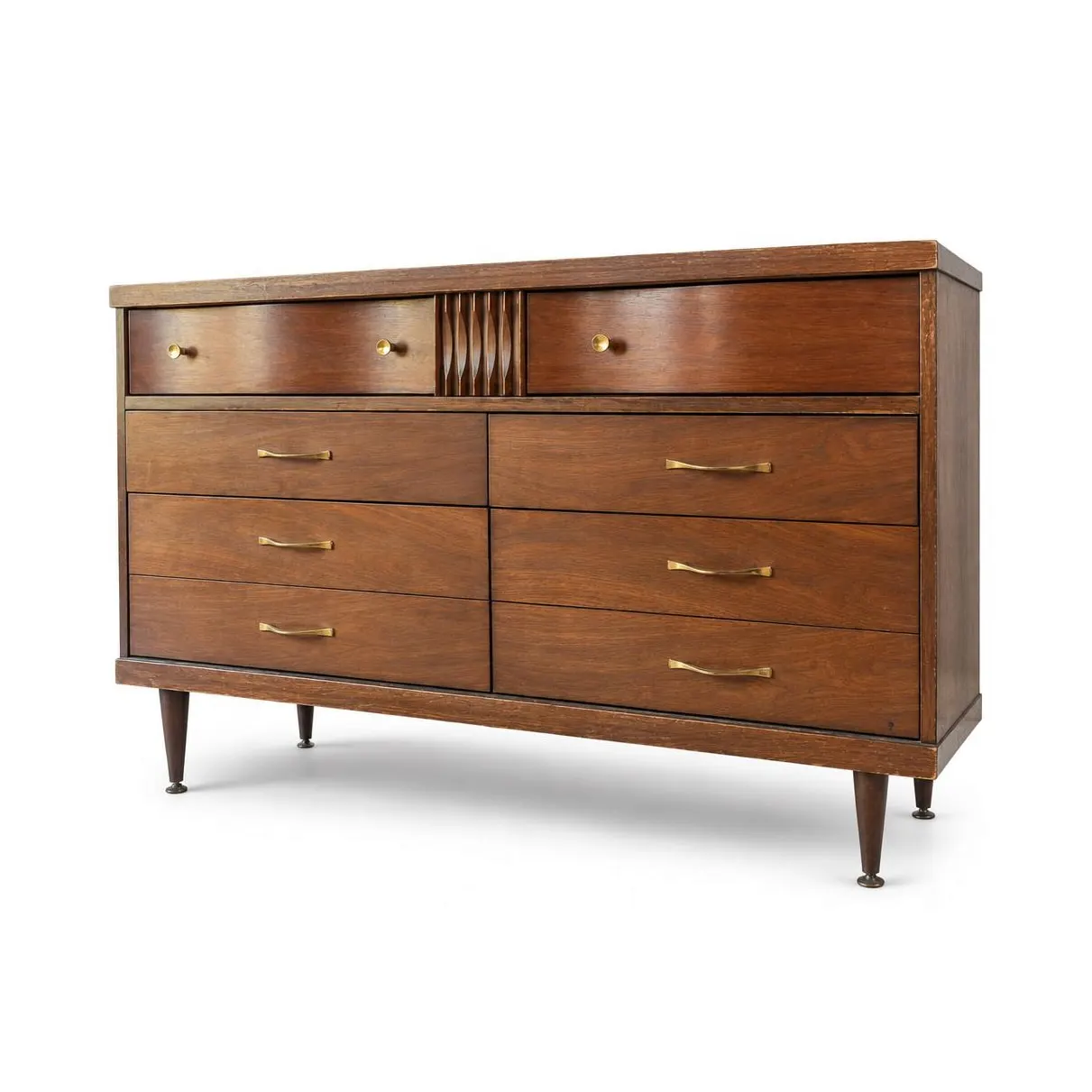
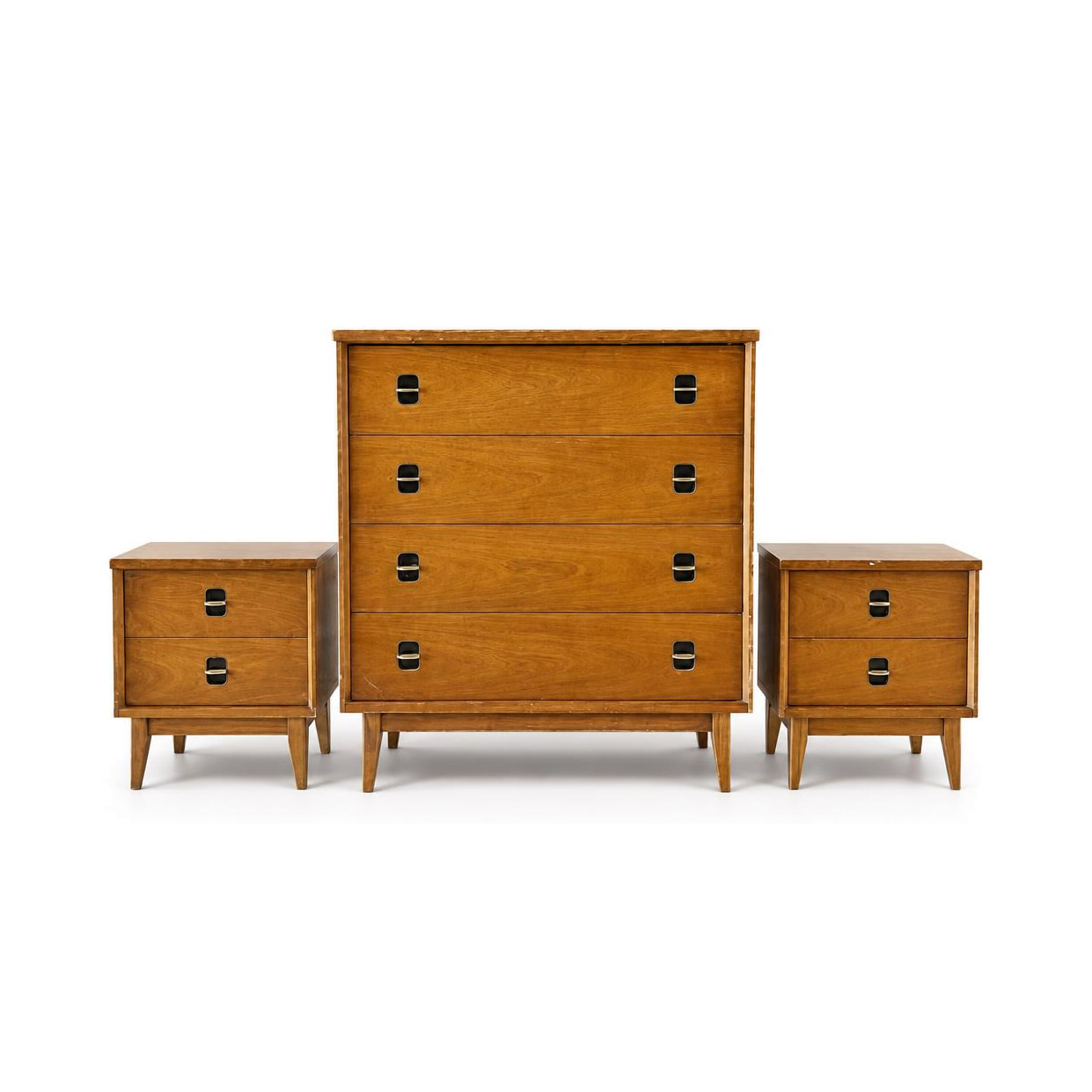
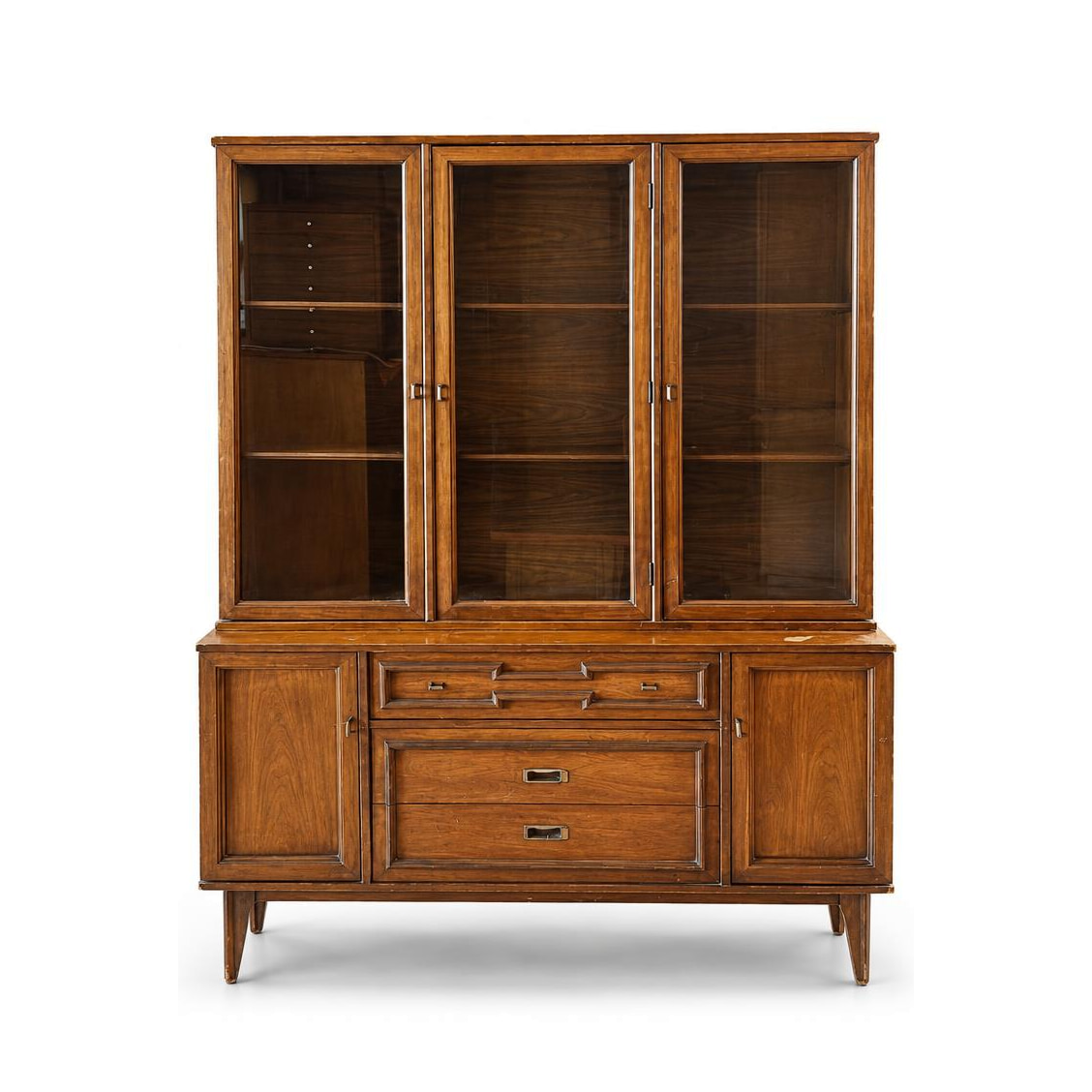
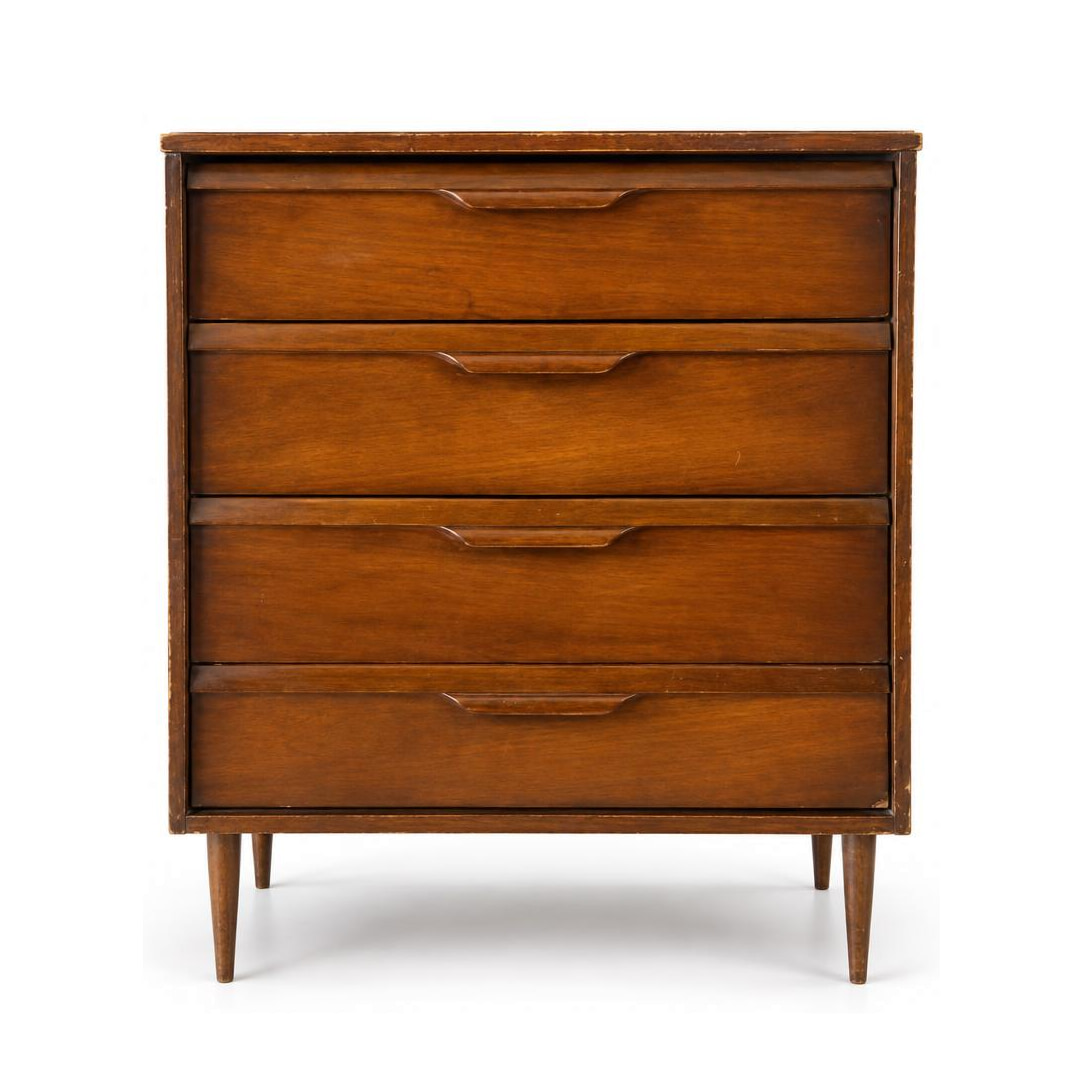
J.D. Bassett, his brothers Charles and Samuel and Reed L. Stone found the Bassett Furniture Company in Bassett, Virginia.[1]–[3]
Thomas B. Stanley, J.D. Bassett's son-in-law and a Bassett executive, leaves to found Stanley Furniture nearby.[1][17][18]
The family's separate furniture companies are brought together as Bassett Furniture Industries.[1][2][4]
Bassett is selling both Scandinavian-style groups, such as the Denmark occasional tables, and traditional suites, such as Monticello.[12][13][15]
Bassett runs national magazine advertising for suites designed by Leo Jiranek, among them Monticello, Chimney Corners and Royal Dane.[1][12]
Bassett's catalogues bill the company as the world's largest manufacturer of wood furniture.[5][11][12]
Bassett remains in business as a public company selling through its own and licensed stores.[4][6]
Nothing by Bassett is in the studio right now. Tell Kate what you need and she will look for one.
According to the International Directory of Company Histories, Bassett's first products were oak beds, dressers and washstands, with dining room furniture added in 1925. In the 1950s and 1960s it sold complete suites for the bedroom and dining room, plus occasional tables, chairs, sectionals and nursery furniture, at prices its advertising pitched to ordinary family budgets.
The company covered almost every popular style at once. Its 1964 catalogue moves from Scandinavian and contemporary groups in walnut or cherry veneer to Italian Provincial, French Provincial, Early American and English country designs, and its magazine advertising from 1959 to 1965 shows the same range.
Most case pieces were veneered. Better lines used walnut, cherry or mahogany veneer over hardwood, while budget lines used veneer over particleboard, with stapled drawers and hardboard backs. Many 1960s Bassett dressers, chests and tables have tops of wood-grain or plain Formica laminate rather than wood.[1][7][9]–[12]
The International Directory of Company Histories dates a large, elaborate Bassett 'Waterfall' design to 1938, the rounded-edge style of the period.[1]
A 1958 group of Scandinavian-style occasional tables on hardwood bases, sold in a walnut finish with brass ferrules or a pale 'pumice' finish with chrome ferrules.[13]
An 18th-century traditional bedroom and dining group of 23 major pieces, advertised in LIFE in 1958; one owner found the name printed on the back of a dresser.[12][15]
An Early American collection of about 90 open-stock pieces in a spice-brown or honey finish, with pineapple-motif hardware, poster beds, hutches and a water bench.[10][12]
A Scandinavian-style bedroom and dining group in cherry veneers with brass accents and oversized mirrors.[12]
A low-priced Scandinavian group sold in a pale Champagne or a walnut finish.[12]
A mid-century line that appears in Bassett's 1959 to 1965 advertising and that dealers describe as one of its better-built modern lines.[9][12]
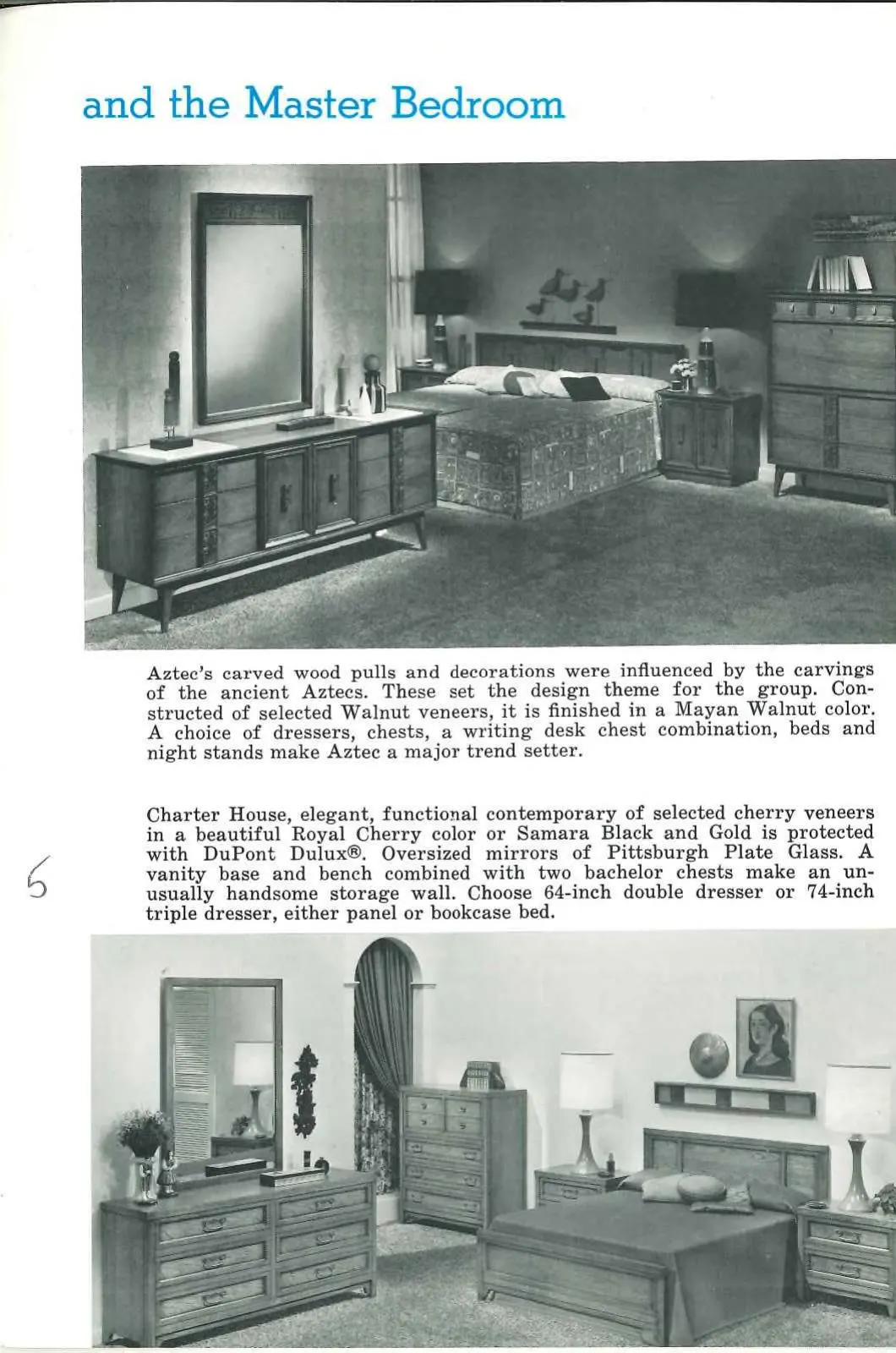
Walnut-veneer bedroom furniture with carved wood pulls and carved panels inspired by Aztec carving, finished in a colour Bassett called Mayan Walnut. The finish name is the likely source of the 'Bassett Mayan' name dealers use.[7][10][16]
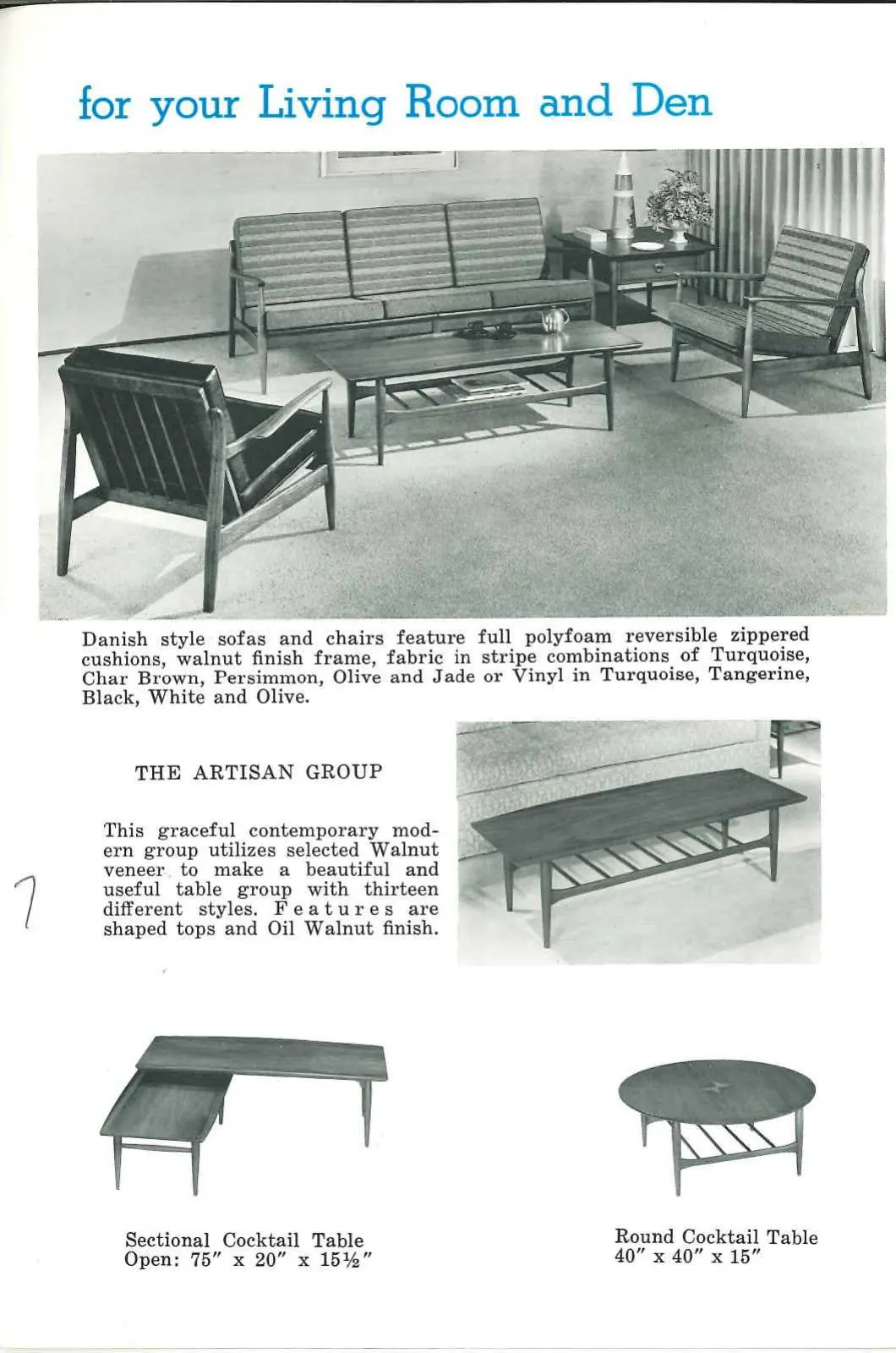
In the 1964 catalogue Artisan is a group of thirteen occasional tables in walnut veneer with shaped tops and an oiled walnut finish; dealers also use the name for Bassett walnut case pieces.[7][9][10]
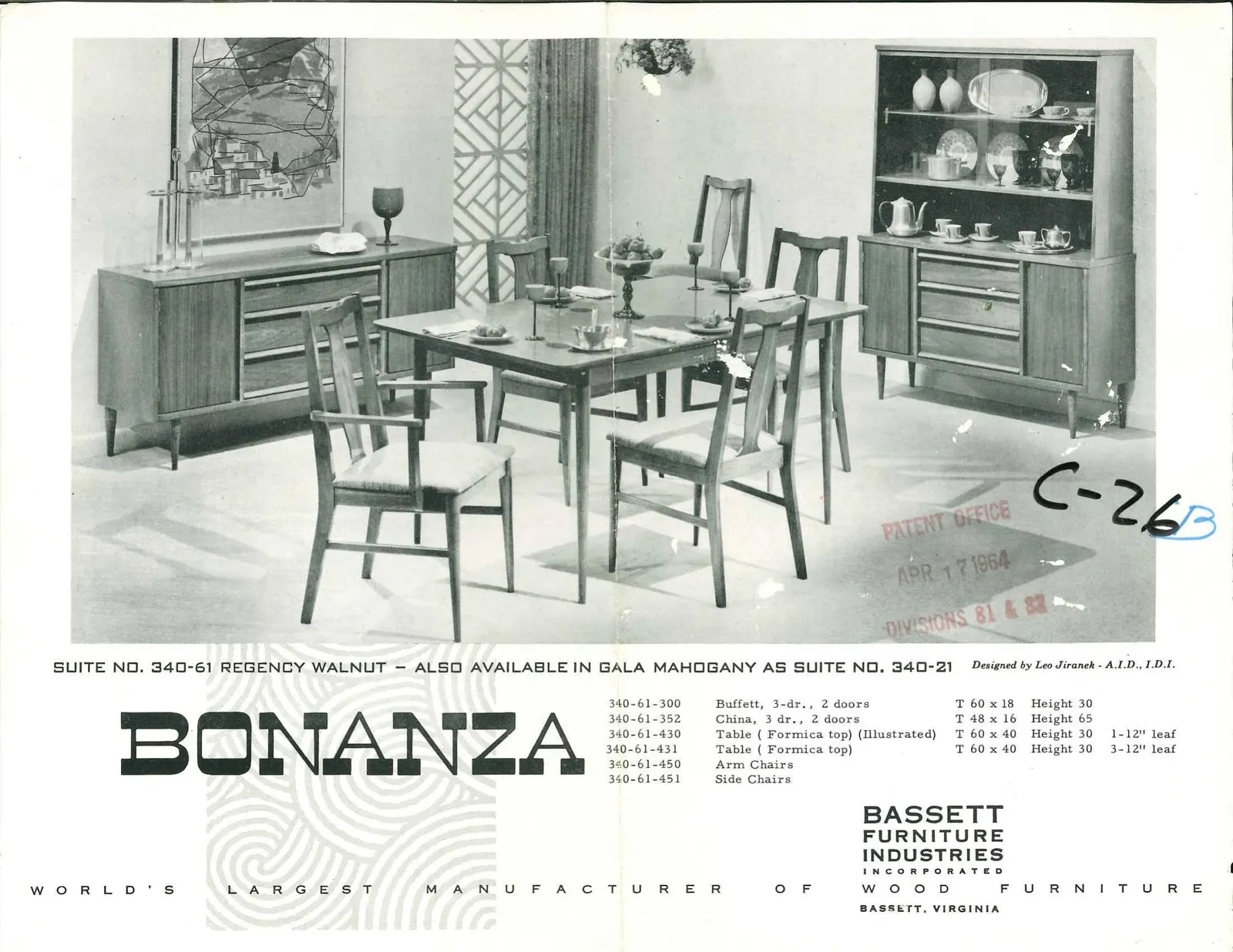
A straight-lined contemporary bedroom and dining group with rounded wood mouldings that double as drawer pulls, in American walnut (Regency Walnut, suite 340-61) or African mahogany (Gala Mahogany, suite 340-21), with Formica table tops.[11]
Contemporary bedroom and dining furniture in walnut veneers with thin oval overlays on drawers and doors, tapered legs and wood-grain Formica tops.[10]
A contemporary bedroom group in cherry veneer, sold in Royal Cherry or a black and gold finish.[10]
Italian Provincial living, dining and bedroom furniture with parquet panels of maple burl and birch veneer and carved rosettes.[10]
French Provincial bedroom and dining furniture on cherry veneer, finished in Patrician Cherry or Chateau White.[10][12]
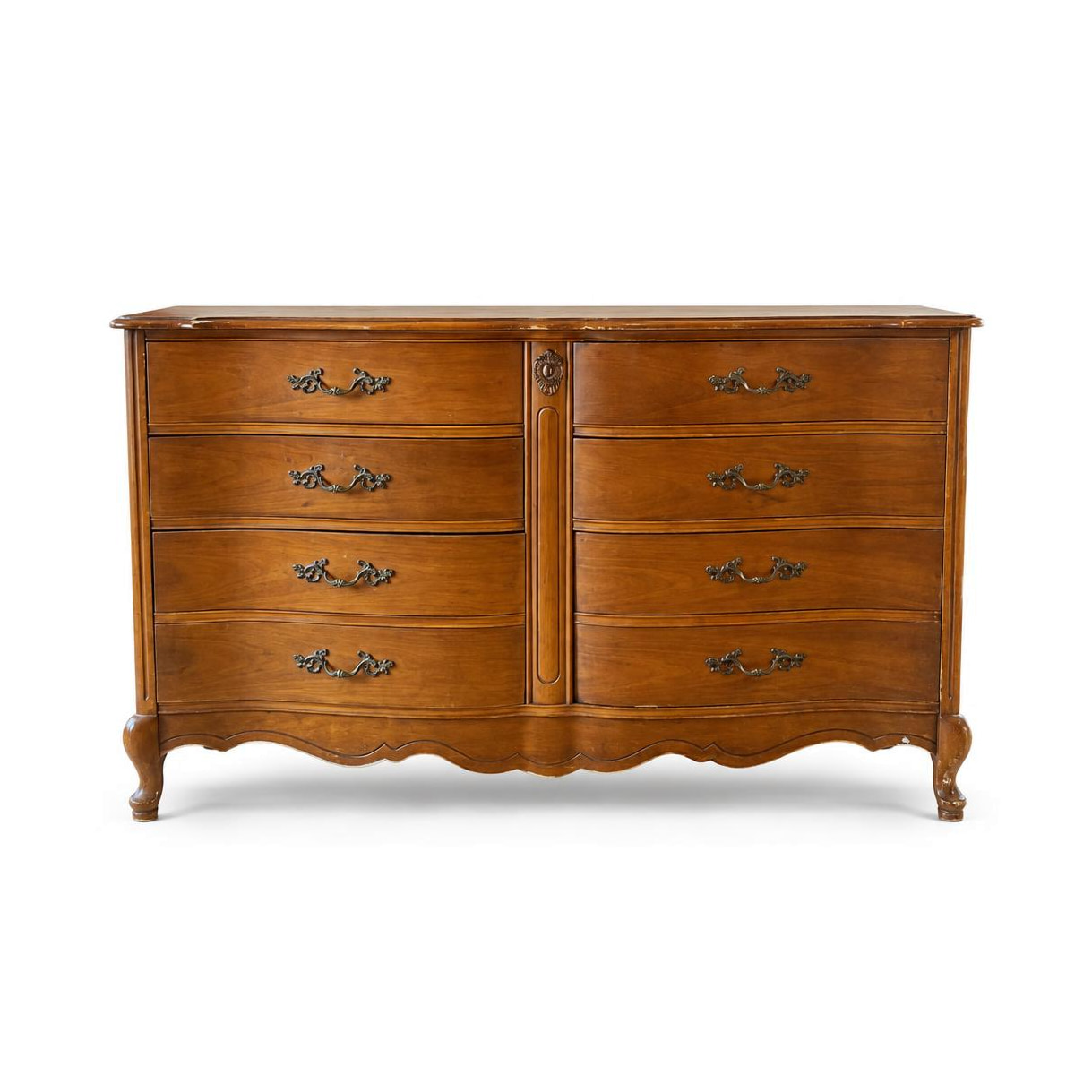
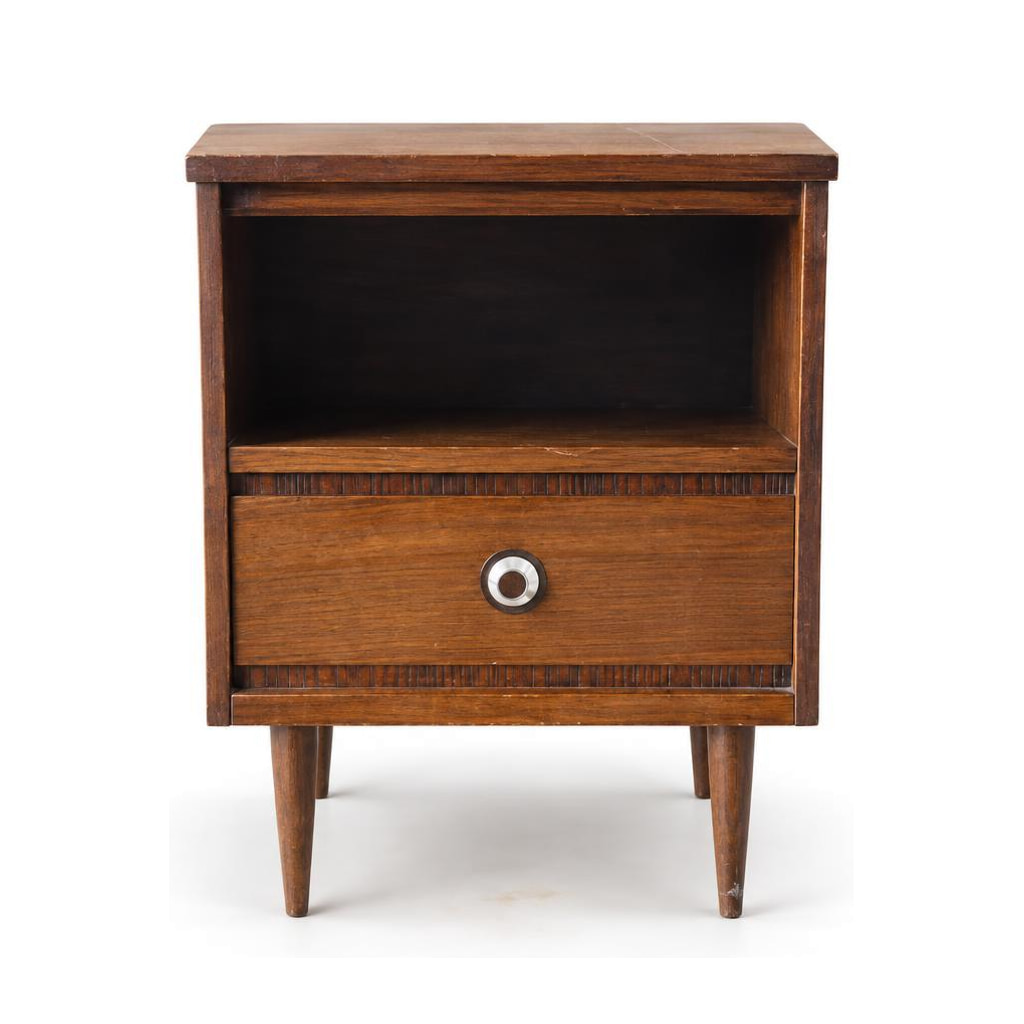
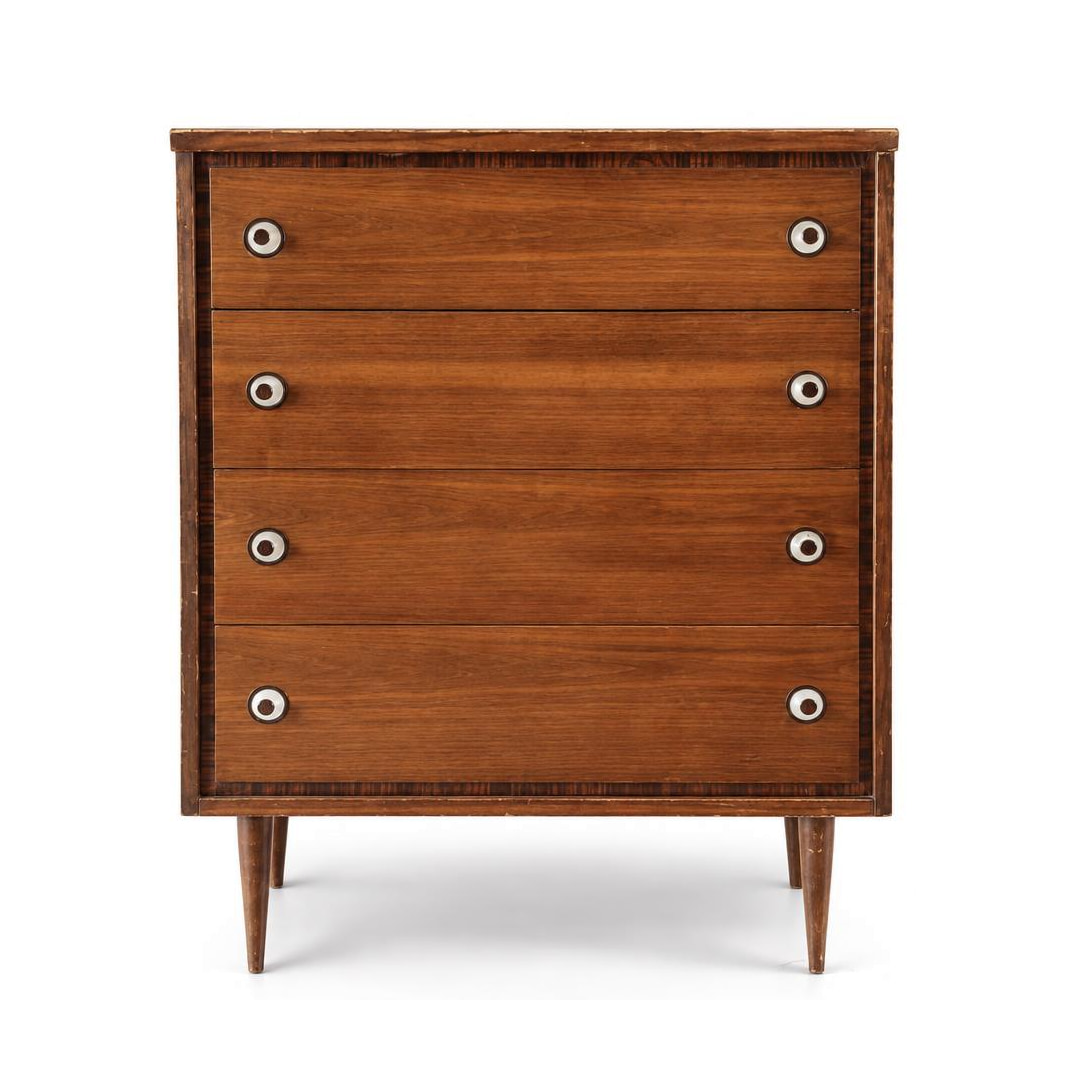
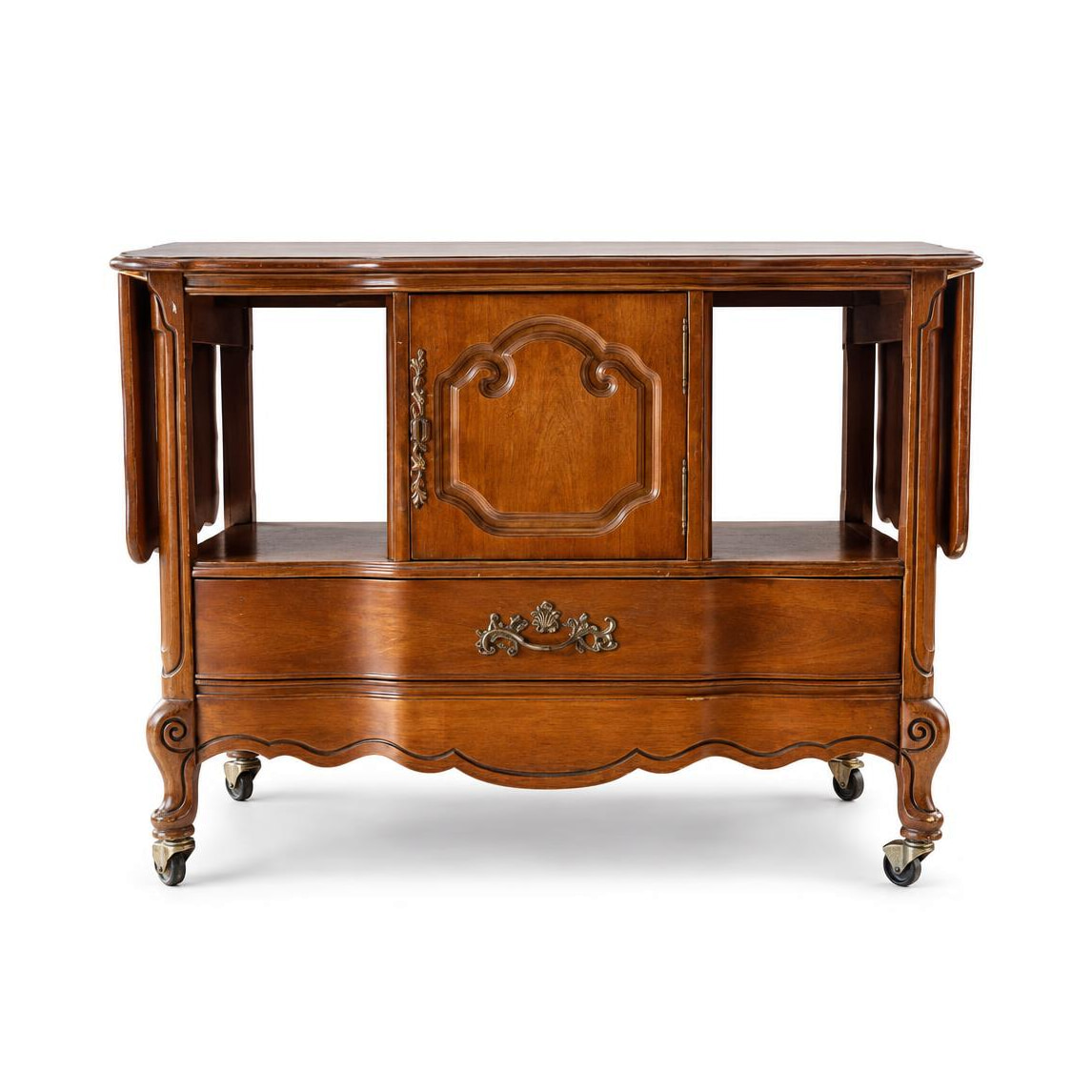
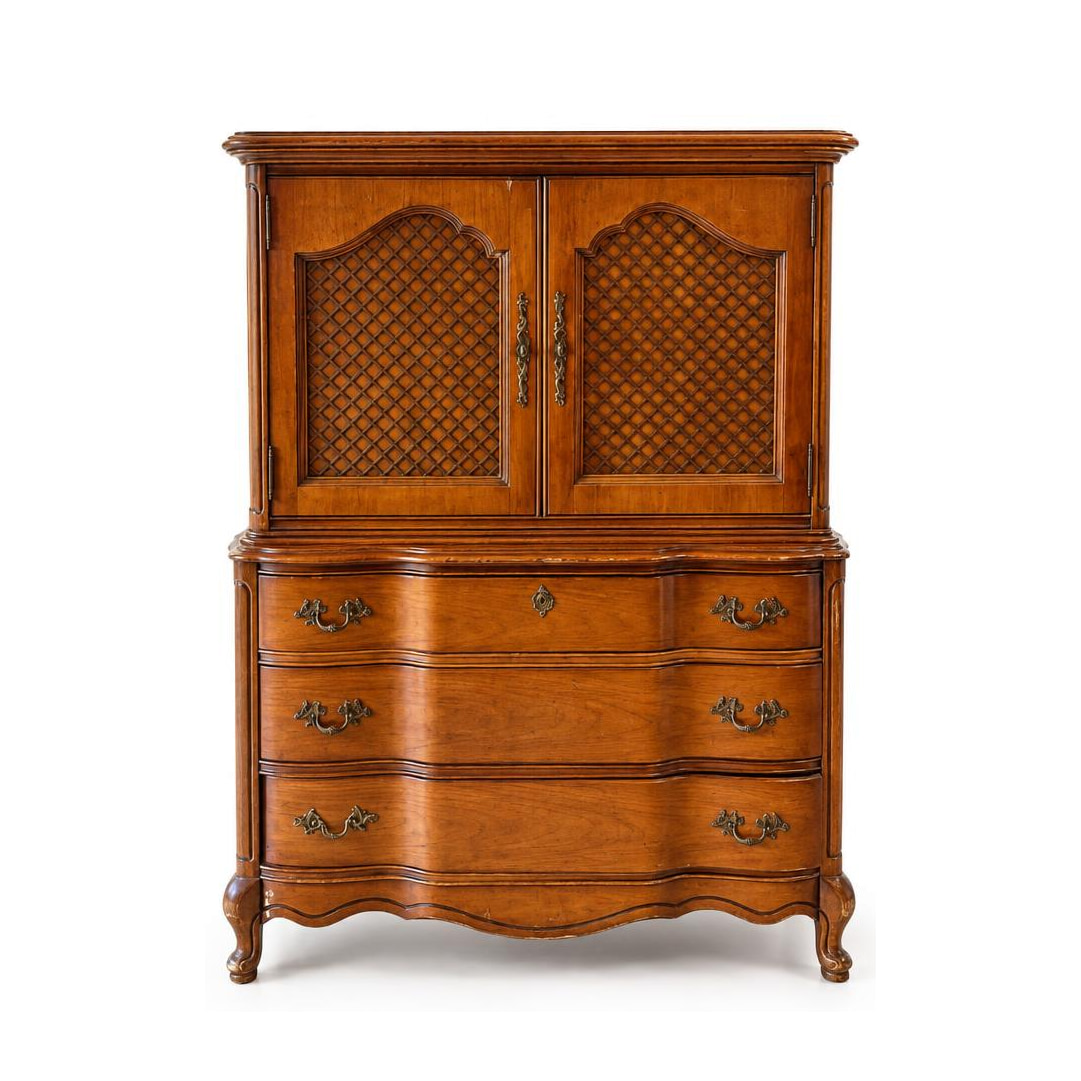
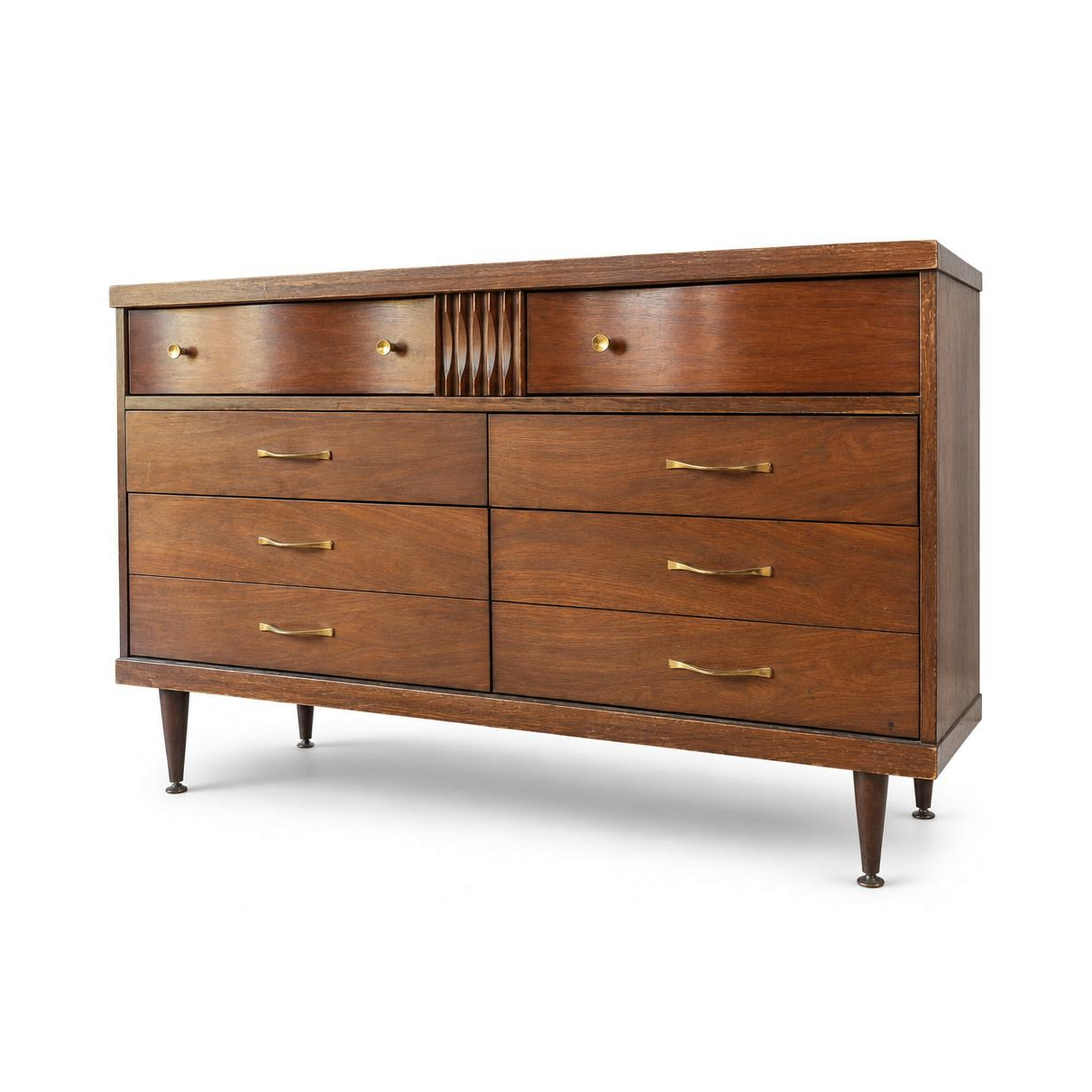
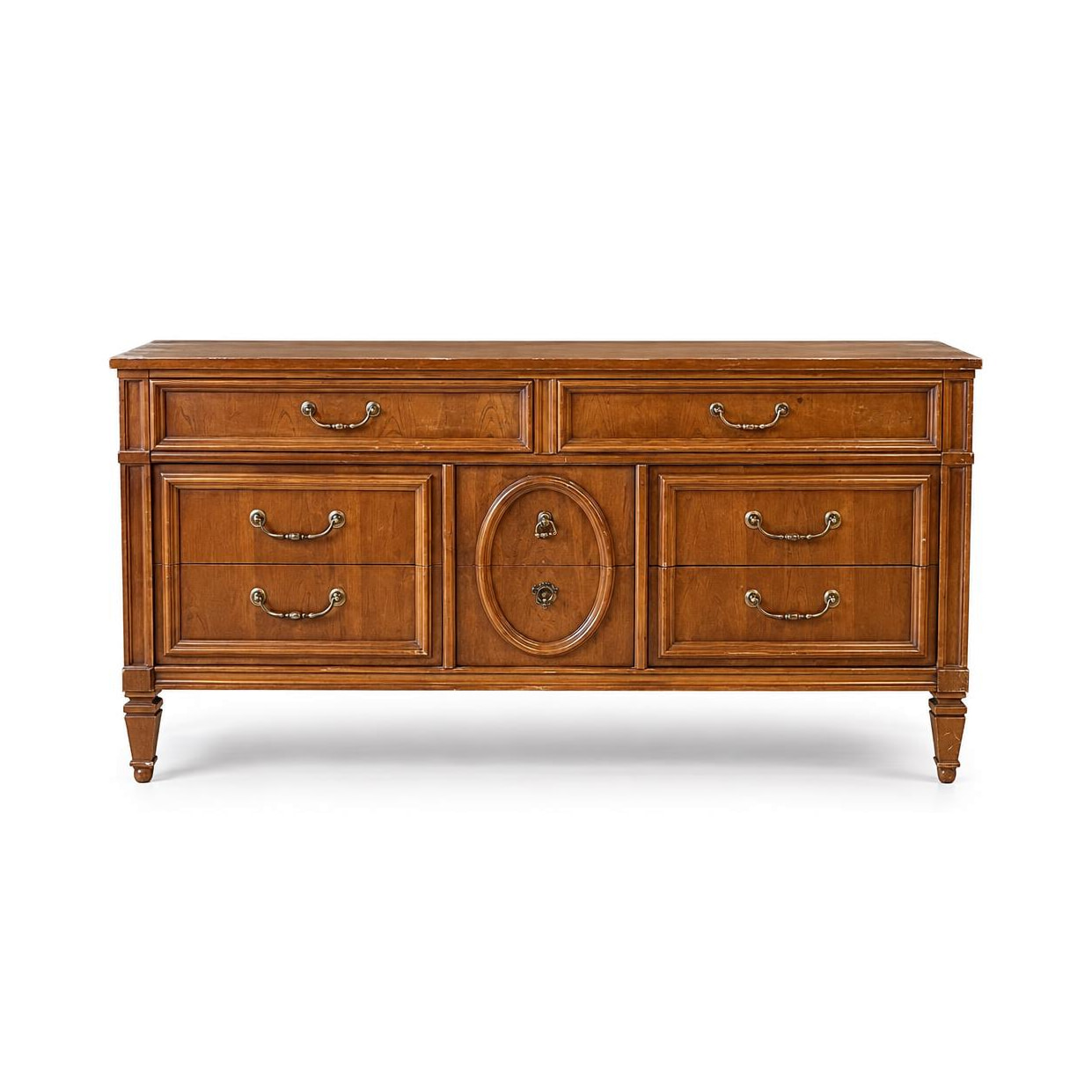
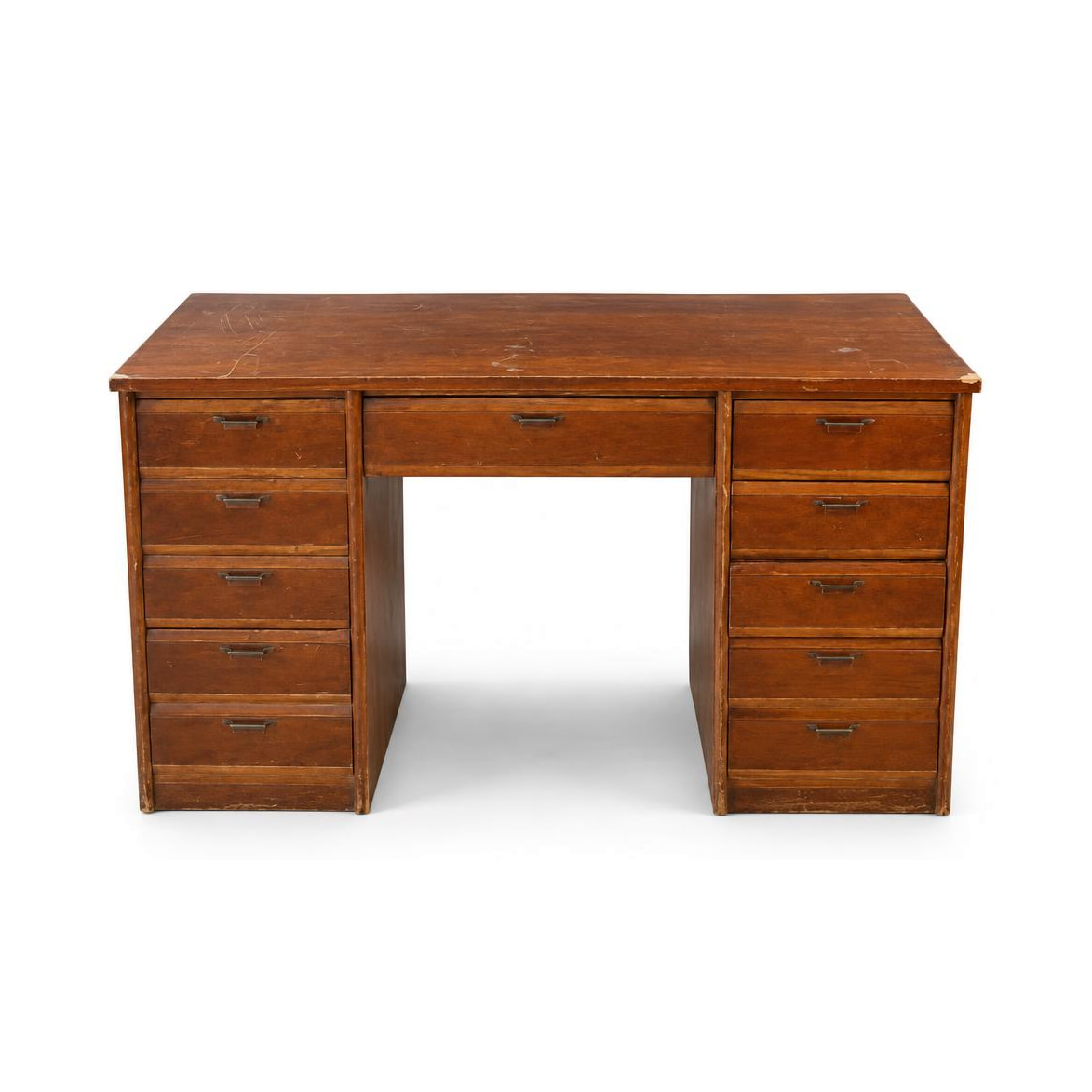
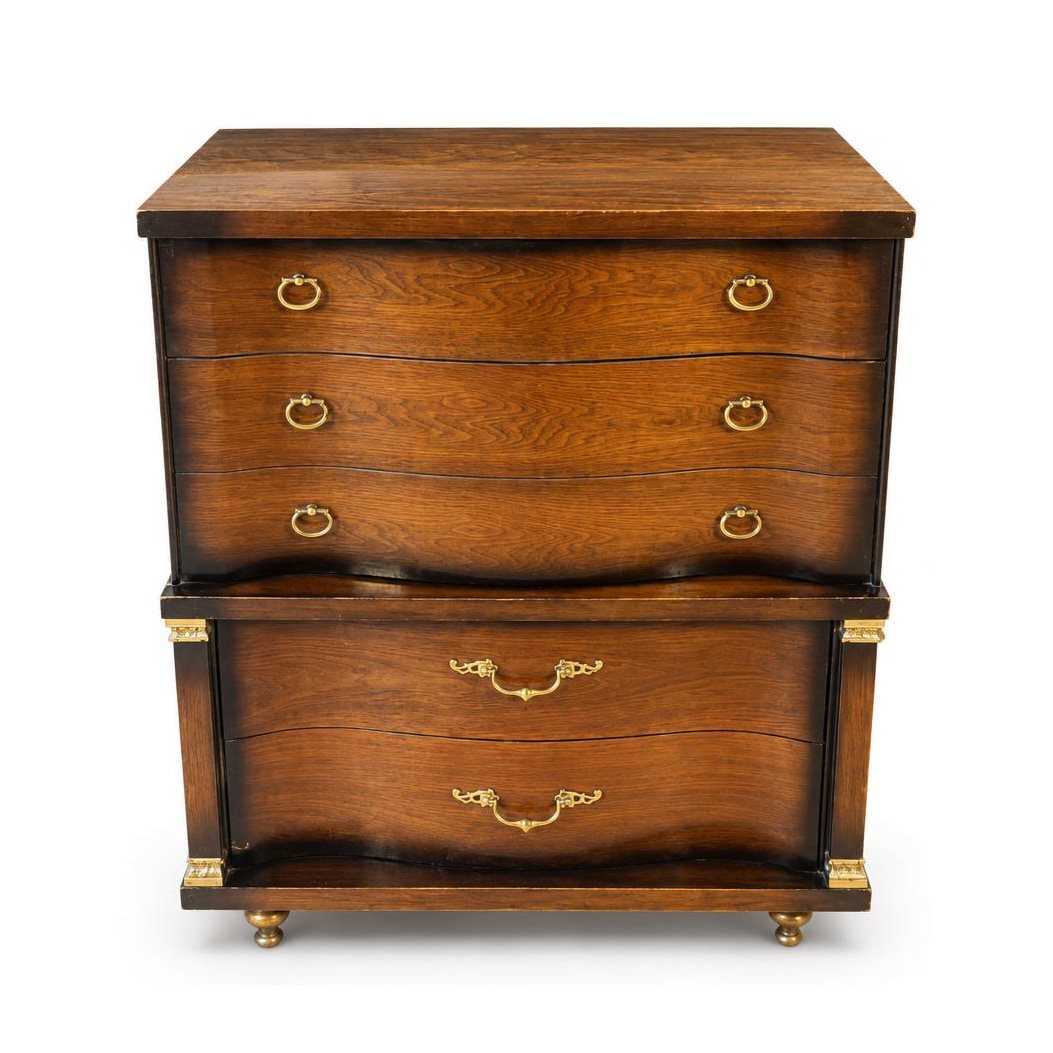
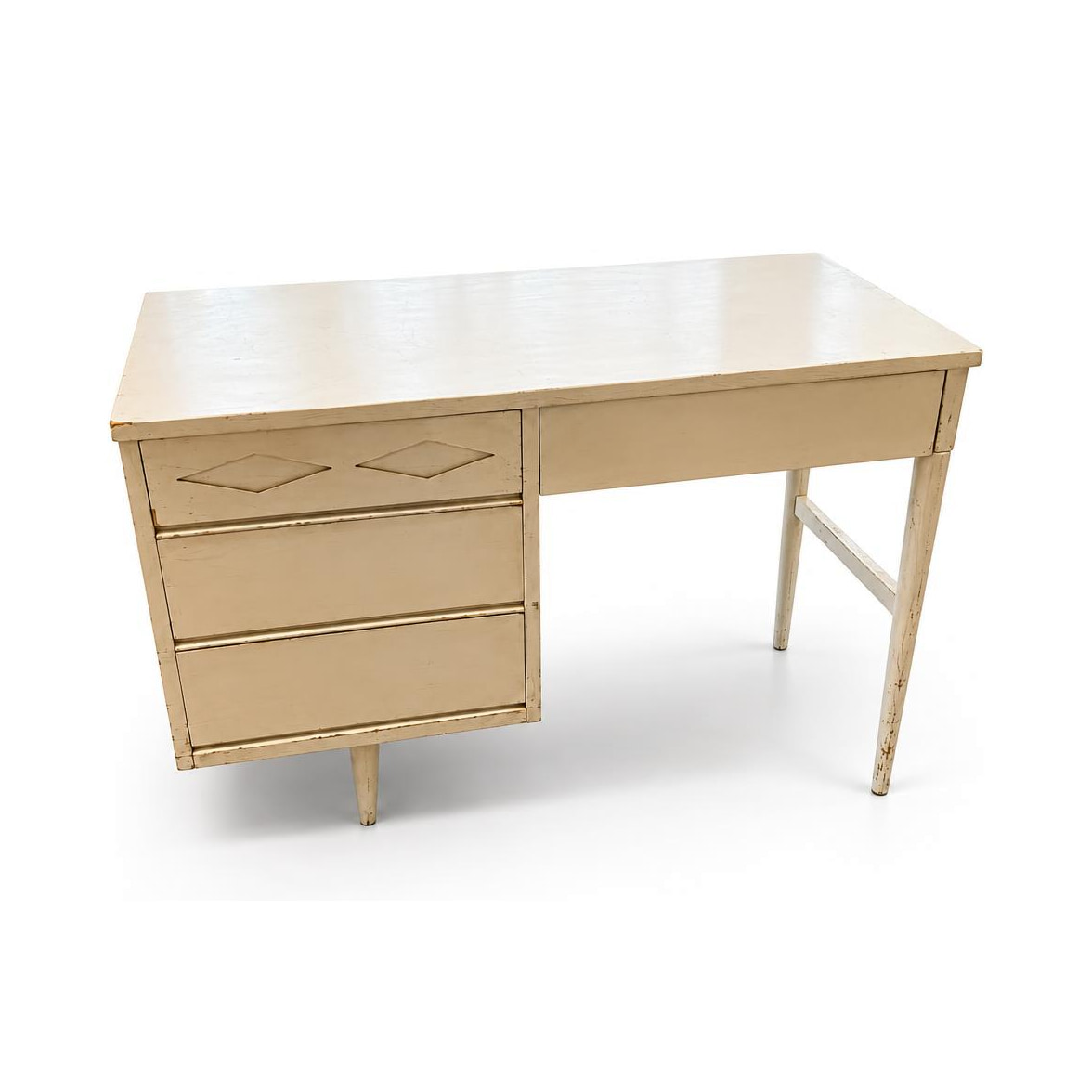
$120 to $1,050
Bassett grew out of a lumber business. The Bassett family ran sawmills in Henry County, Virginia, that cut railroad ties and other timber for the railways. In 1902 John David (J.D.) Bassett, his brothers Charles and Samuel, and their brother-in-law Reed L. Stone formed the Bassett Furniture Company to turn that local hardwood into furniture instead of selling it as lumber. J.D. Bassett also put money and know-how into other furniture companies in the area, several of them run by relatives, including Stanley, Hooker and Vaughan-Bassett. His son-in-law Thomas B. Stanley was a Bassett executive until 1924, when he left to found Stanley Furniture. In the early 1930s the family's separate furniture firms were brought together as Bassett Furniture Industries. By the middle of the century the company was turning out wood furniture in large volume. Bassett is still in business and sells through its own stores.[1]–[8][17]–[19]
Usually not entirely. Bassett's own catalogues describe most case pieces as walnut, cherry or mahogany veneer, and many tops are Formica. Its better mid-century lines put veneer over solid hardwood with solid wood legs, while budget lines used particleboard. A few groups, such as a 1964 Colonial table group, were sold as solid maple.[7][9]–[11]
Find the label or stamp, usually inside a drawer or on the back, and note the line name and any style number. Then match them to dated Bassett catalogues or magazine ads; owners have dated pieces this way, for example matching a Monticello dresser to a 1958 LIFE advertisement.[7][8][12][15]
Yes. Bassett Furniture is still based in Bassett, Virginia, is publicly traded and sells through its own and licensed stores.[4][6]
It varies by line, because Bassett made everything from budget to better furniture. Walnut lines with dovetailed drawers and solid hardwood frames are well built; particleboard budget lines are not. Dealers generally price Bassett below comparable Lane or Drexel pieces and below designer-attributed furniture, with walnut and named lines holding value best.[7][9]
Looking for a piece by Bassett? Tell Kate what you need, with the size and budget you have in mind, and she will look for one. Or write to hello@formanashville.com.
New pieces go out first in the weekly letter.
One email a week, on Thursday. What arrived, what sold and for how much, and a line or two on what we are working on.