Tahiti
Bamboo-style edging and drawer trim on lighter finishes, sometimes with palm or fern motifs, made for dens, sunrooms and Florida rooms.[4][10]
Dixie Furniture Company made medium-priced bedroom and dining furniture in Lexington, North Carolina, from the early 1900s until 1987, when Masco merged it and its sister companies into Lexington Furniture Industries. Under Henry T. Link from 1936 it became known for assembly-line production and for bedroom suites in Federal, French Provincial, bamboo-trimmed and mid-century modern styles.
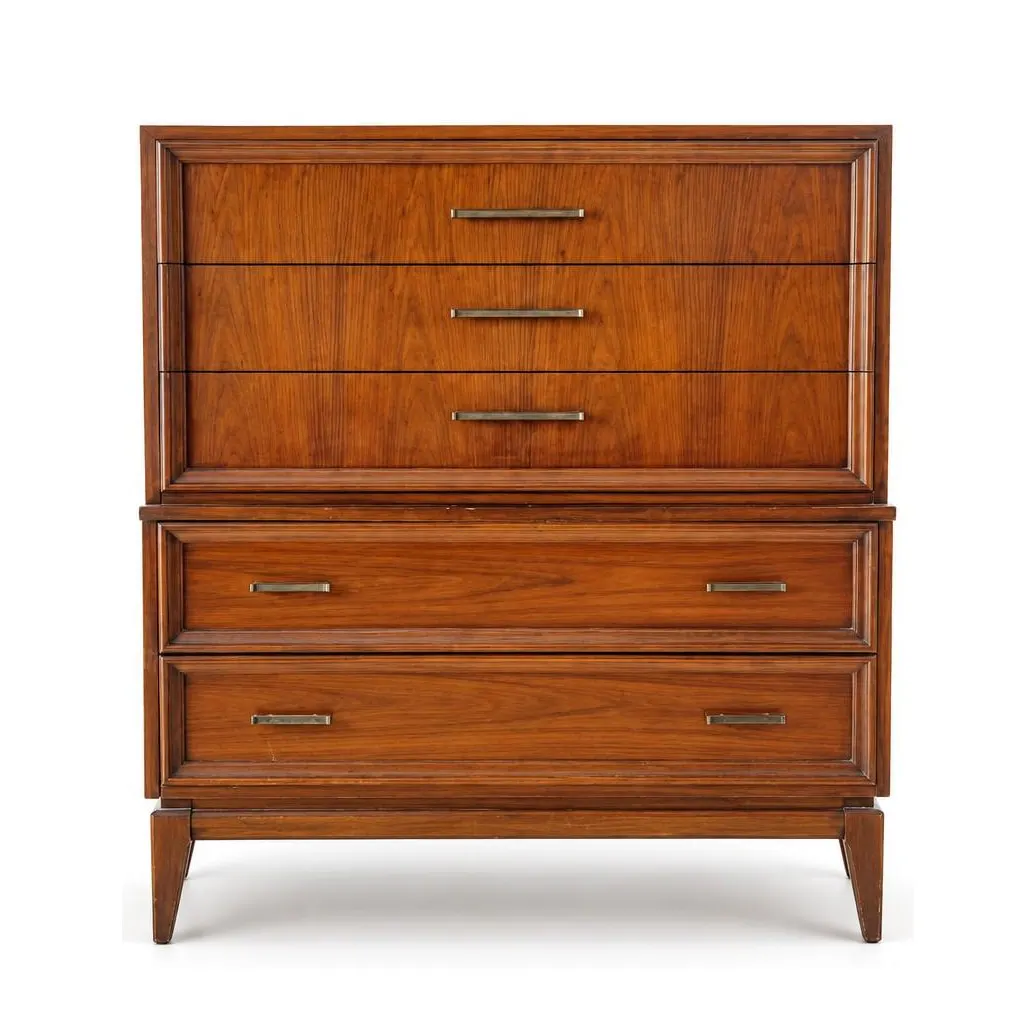
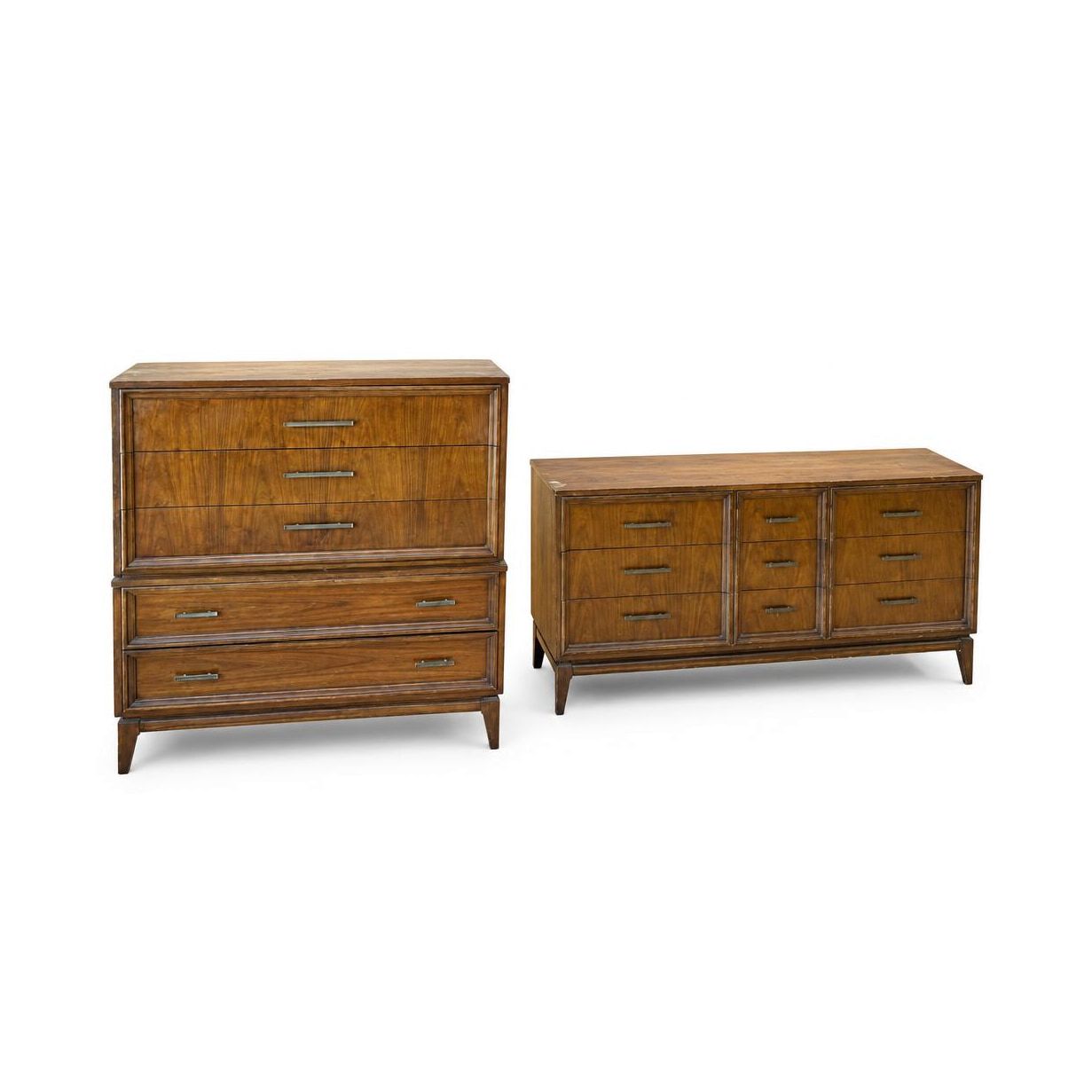
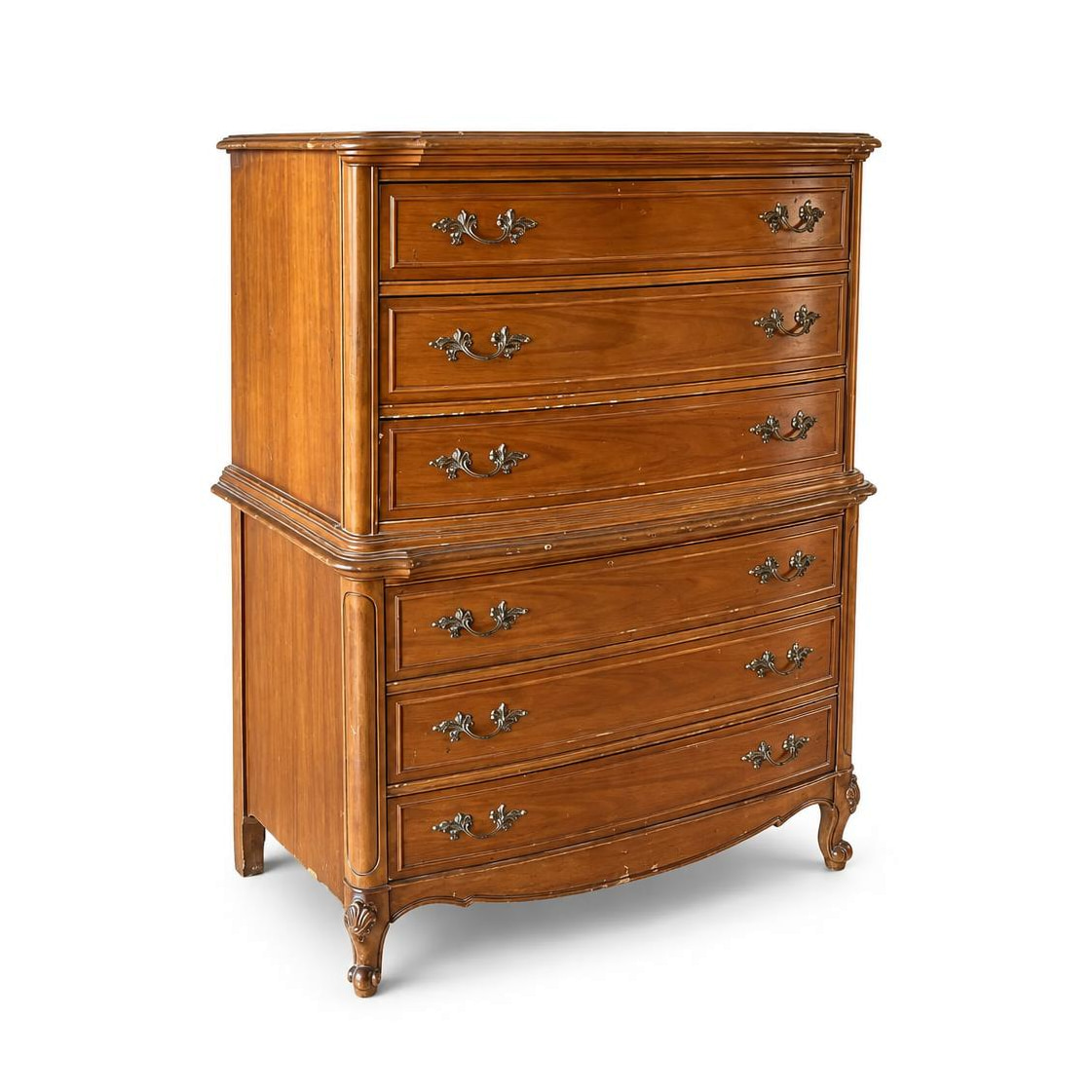
Dixie Furniture Company is started in Lexington, North Carolina; accounts give 1901 or 1903.[3]–[5][10]
Dixie is combined with the neighbouring Elk furniture company as Elk-Dixie.[2][3]
Henry T. Link and a group of investors buy the Dixie side and run it as a separate company again.[1]–[3]
After visiting car factories, Link puts motorised conveyors into the Dixie plant, bringing assembly-line methods to furniture making.[1][3][4]
Link-Taylor is set up as a model factory, making higher-priced bedroom furniture.[1][3][4]
Young-Hinkle is started, first making boys' bedroom furniture.[1][3][4]
Henry Link is added for girls' bedroom furniture and later becomes a large maker of wicker.[1][3][4]
Masco buys Dixie, Link-Taylor, Young-Hinkle and Henry Link and merges them as Lexington Furniture Industries; the Dixie name is dropped.[3]–[5][7]
Nothing by Dixie is in the studio right now. Tell Kate what you need and she will look for one.
Dixie concentrated on bedroom and dining room furniture for the middle of the market. Its first success under Henry Link was a five-piece mahogany bedroom suite, which stayed in the range with small changes until the 1980s. The related companies split the market: Link-Taylor made the higher-priced bedroom and dining furniture, Young-Hinkle boys' rooms and Henry Link girls' rooms.
Collectors and dealers group Dixie's output by style. Federal-style bedroom and dining furniture of the 1940s used mahogany veneer over ash with brass hardware, shield-back chairs and Duncan Phyfe pedestal tables. French Provincial ran from the 1950s, increasingly in cream or white paint with gold trim. Bamboo-trimmed tropical furniture was made from the 1950s into the 1970s, and contemporary pieces with straight legs and plain fronts in the 1950s and 1960s.[1][3][4][10]
Bamboo-style edging and drawer trim on lighter finishes, sometimes with palm or fern motifs, made for dens, sunrooms and Florida rooms.[4][10]
Dealers sell Asian-inspired nightstands, dressers and headboards from a Dixie line called Shangri-La and date them to about 1960; many have since been refinished or lacquered.[11][12]
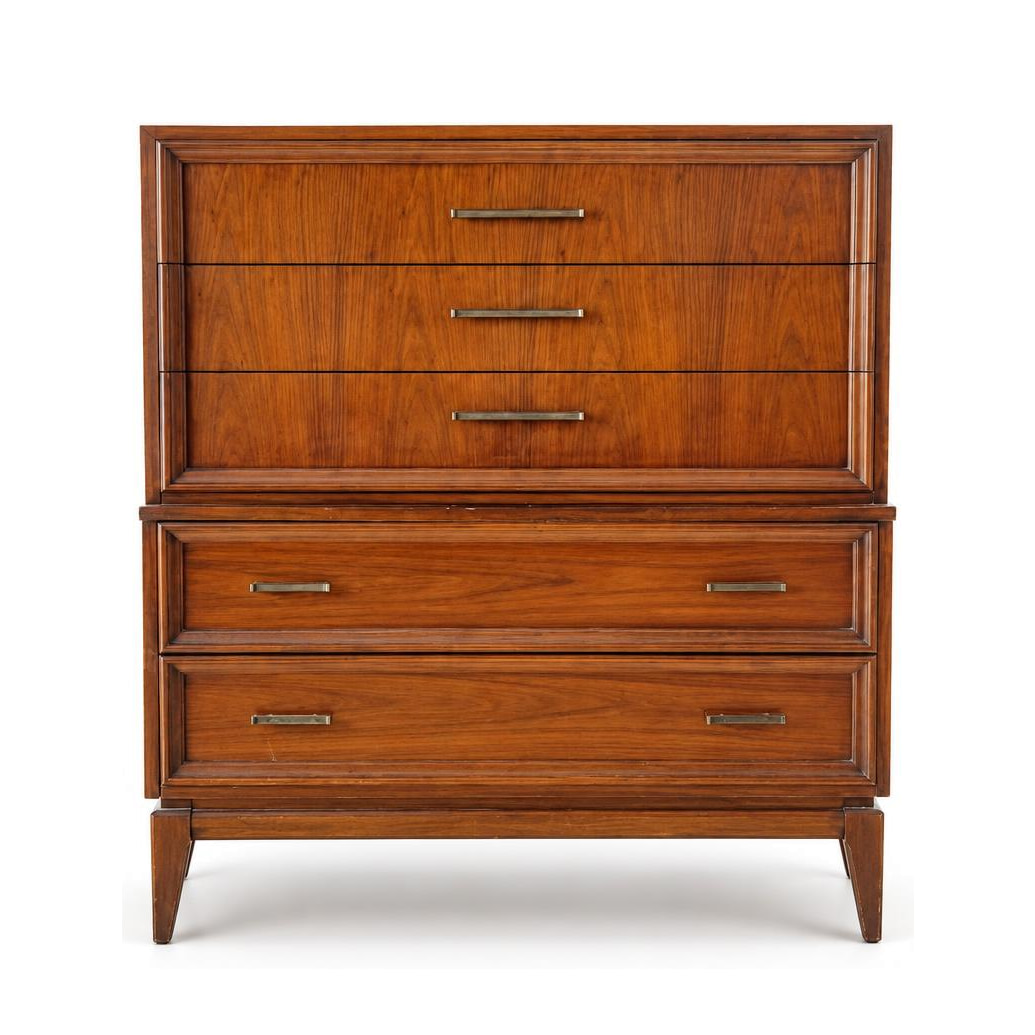
$275 to $1,195
Dixie Furniture Company made furniture in Lexington, North Carolina. Its roots go back to the early 1900s, although accounts differ on the exact year. For a time it was combined with the neighbouring Elk furniture company as Elk-Dixie. In 1936 Henry T. Link and a group of investors bought the Dixie side and ran it as its own company again; the American Home Furnishings Hall of Fame dates Dixie from that year. An early success under Link was a five-piece mahogany bedroom suite. In 1940, after visiting car factories, Link put motorised conveyors into the plant, bringing assembly-line methods to furniture making. Related companies followed, including Link-Taylor around 1949, Young-Hinkle in 1962 and Henry Link. In 1987 Masco bought the group and merged it into Lexington Furniture Industries, and the Dixie name was dropped. The business continues as Lexington Home Brands.[1]–[10]
No. Masco bought Dixie and its sister companies in 1987 and merged them as Lexington Furniture Industries, and the Dixie name was dropped. The business continues as Lexington Home Brands.[3][4][7][10]
No. Dixie Furniture stores in South Carolina are retailers that only share the name; they did not make or sell the Dixie-stamped furniture from Lexington.[8][10]
Dixie was medium-priced furniture, a step below makers such as Drexel and Henredon, while its sister company Link-Taylor made the higher-priced lines. One guide notes that solid wood pieces, French Provincial and mid-century modern designs sell best, and that pressed wood or laminate lowers value.[4][10]
Mostly hardwood, but often veneered: 1940s Federal pieces are mahogany veneer over ash. Some later French Provincial pieces use pressed wood and laminate tops under the paint.[4][10]
Looking for a piece by Dixie? Tell Kate what you need, with the size and budget you have in mind, and she will look for one. Or write to hello@formanashville.com.
New pieces go out first in the weekly letter.
One email a week, on Thursday. What arrived, what sold and for how much, and a line or two on what we are working on.